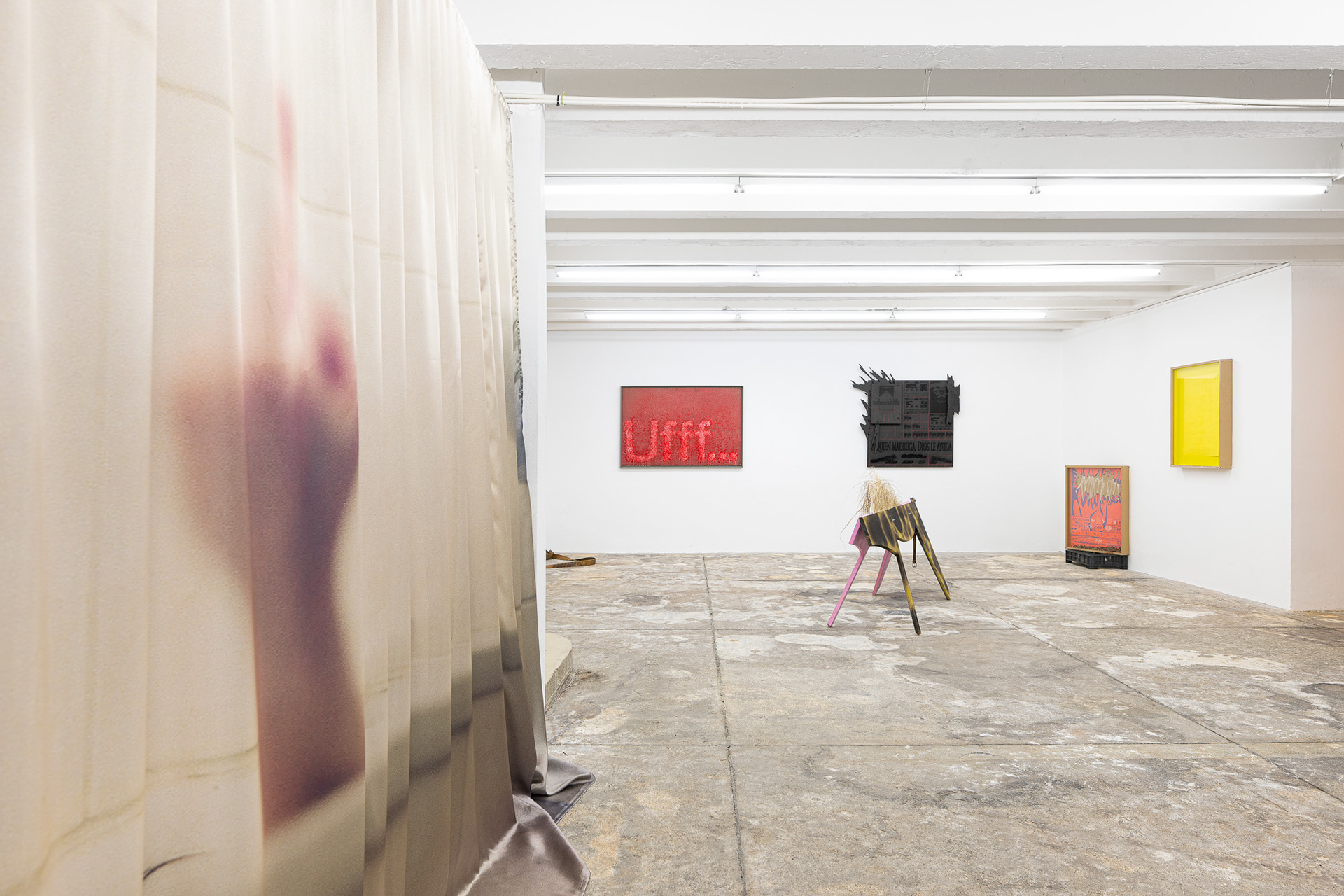
Sometimes I try to change the world; more often, the world changes me.
curated by Zolt Miklósvölgyi
...
VUNU, Bratislava
20.2.-20.3.2026
…
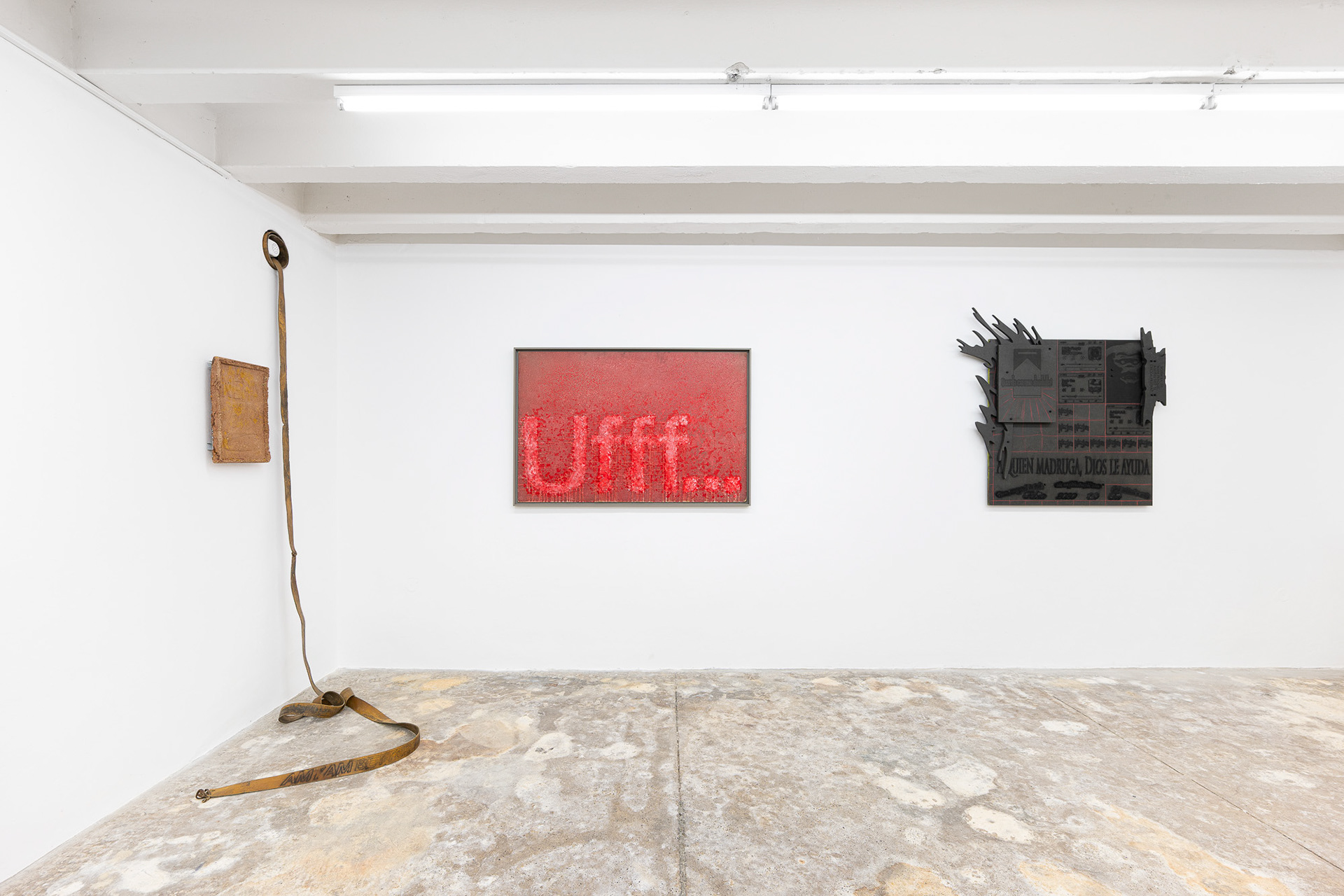
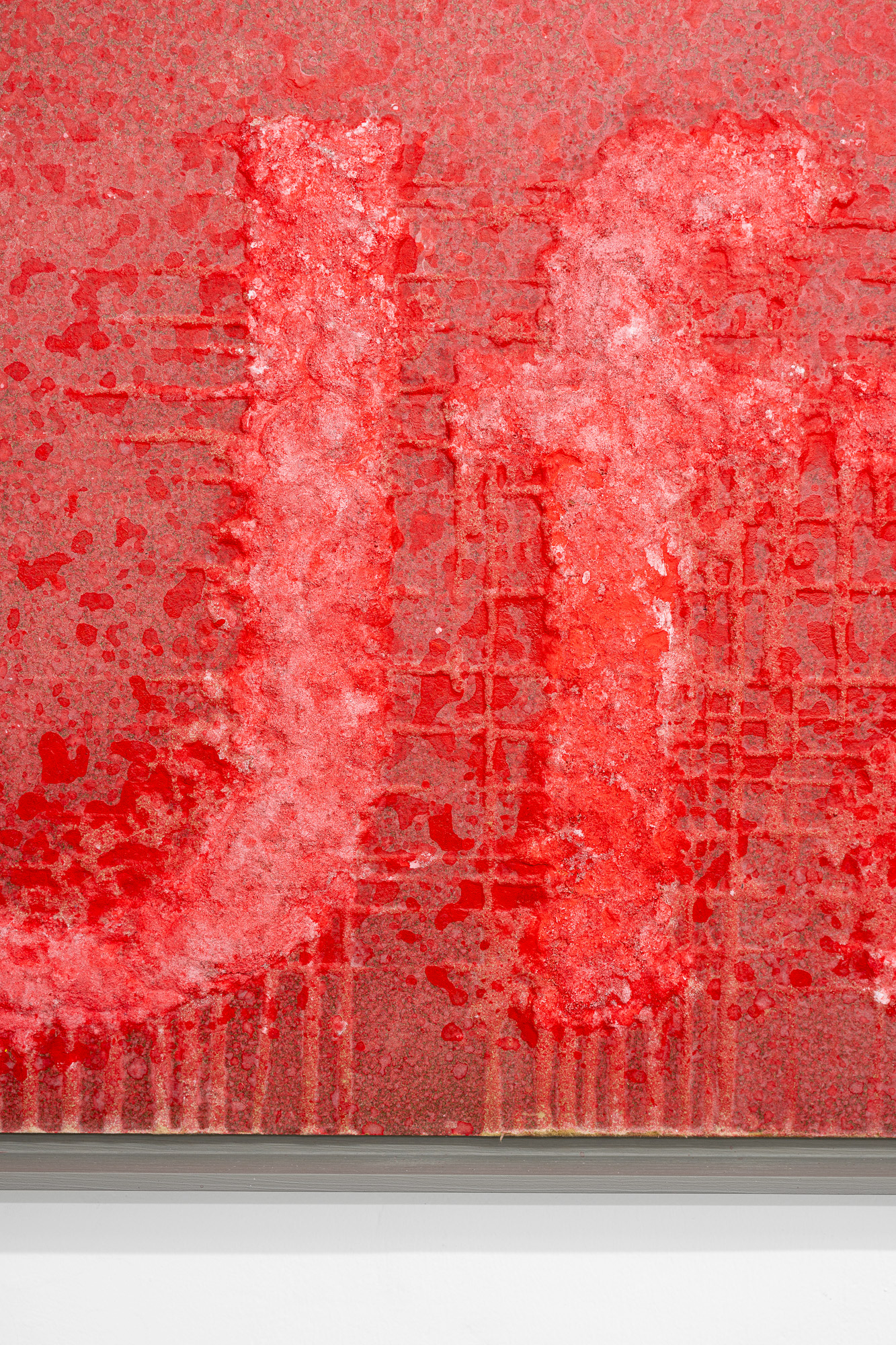
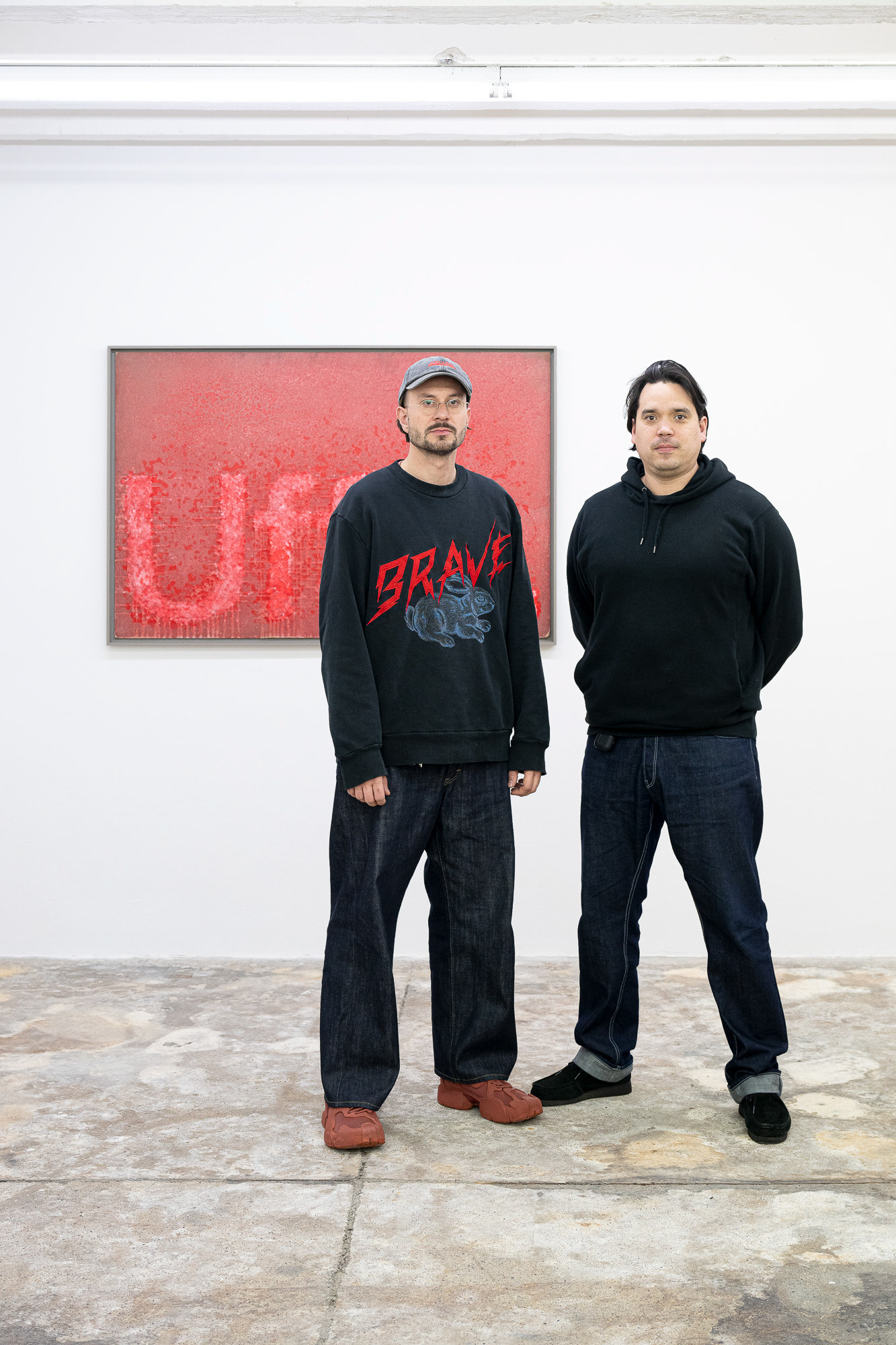
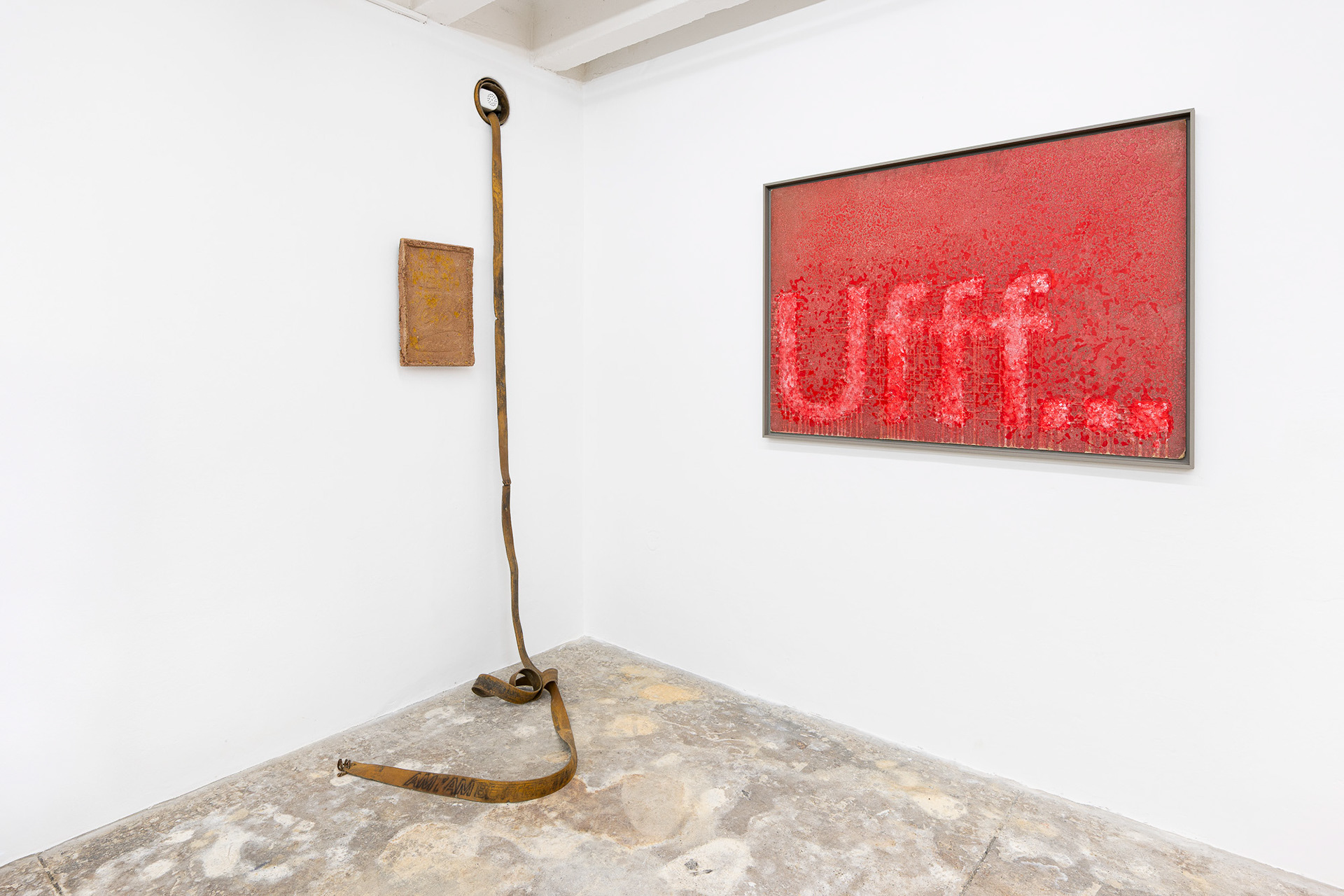
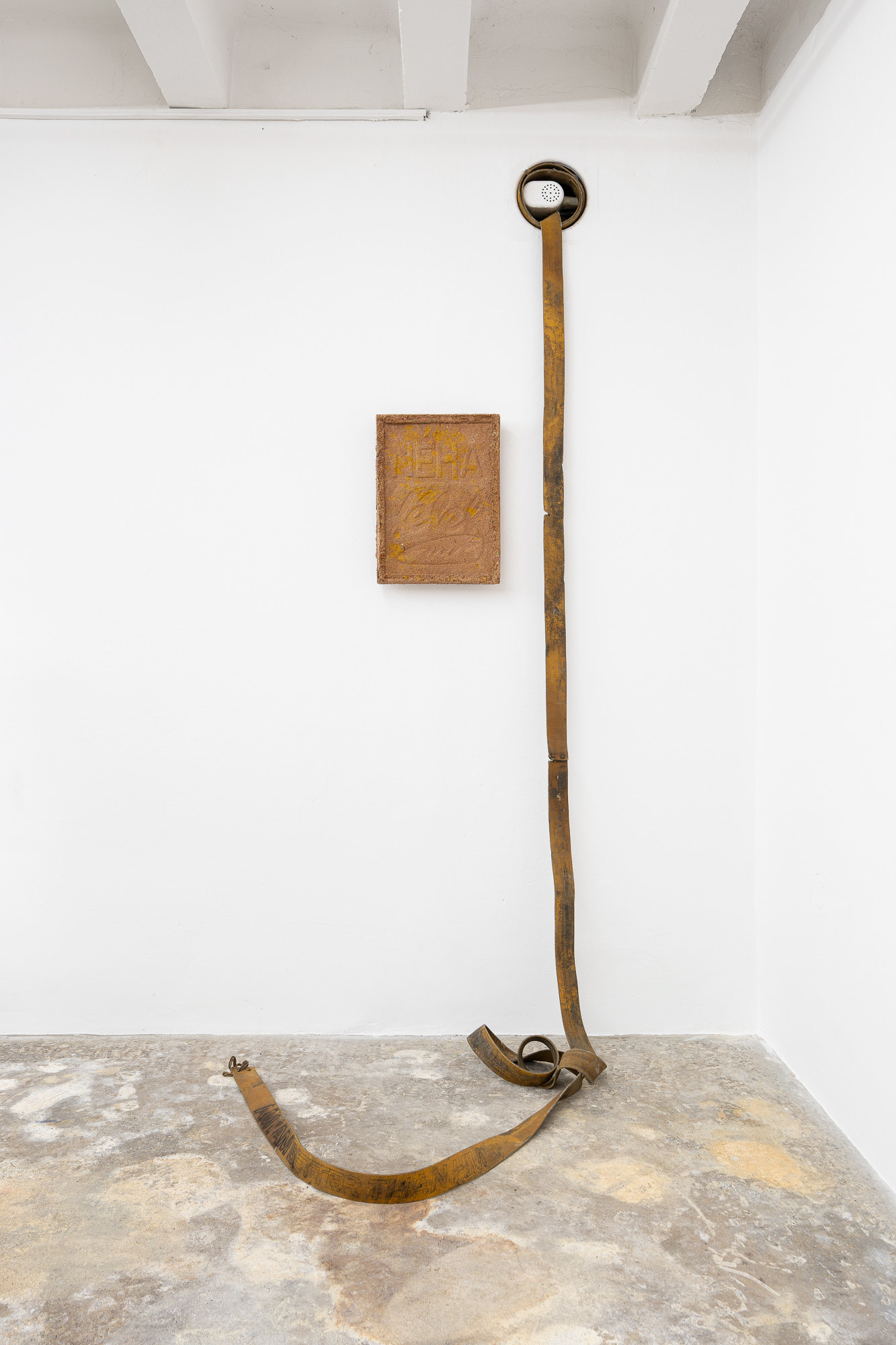
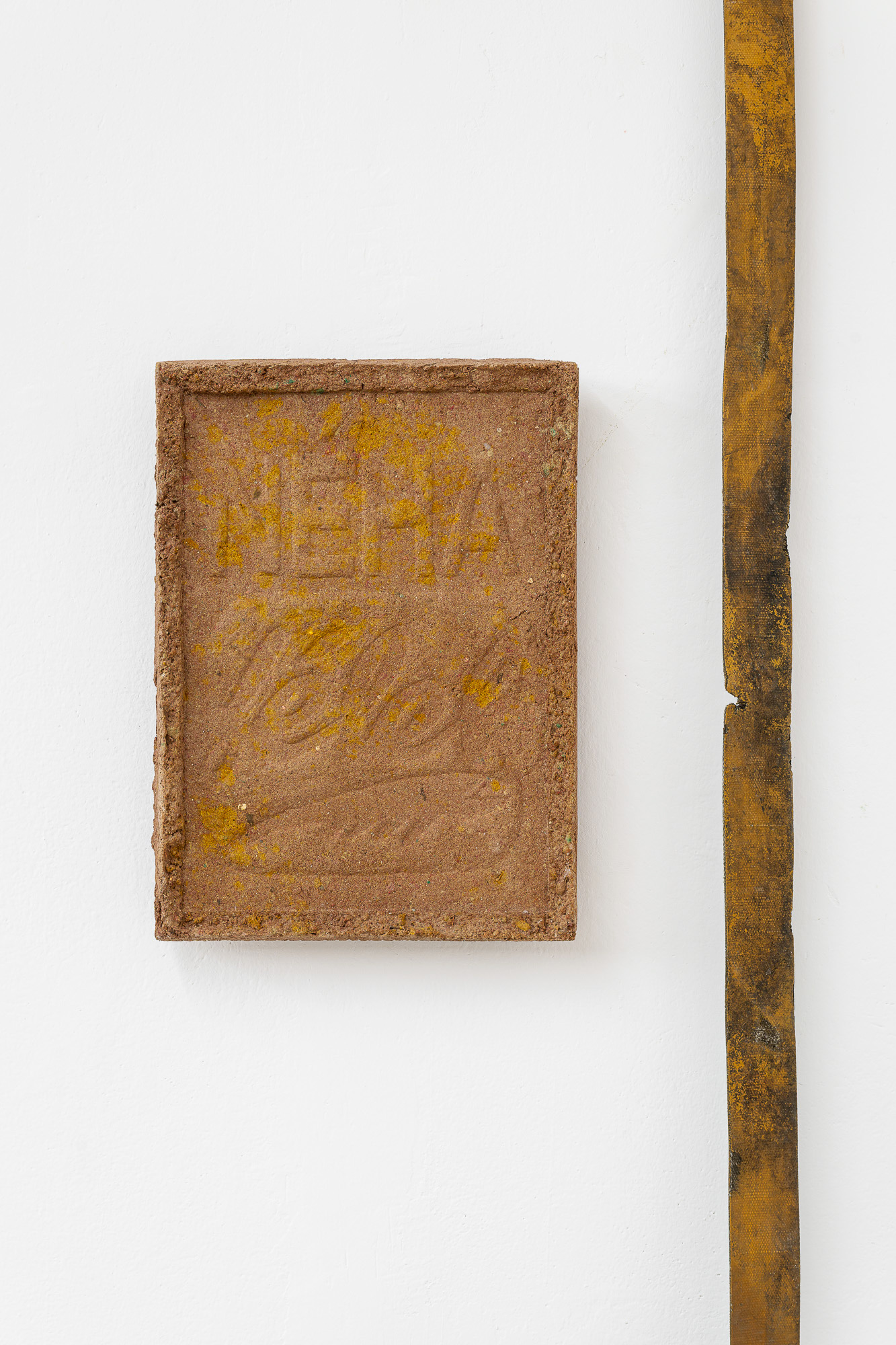
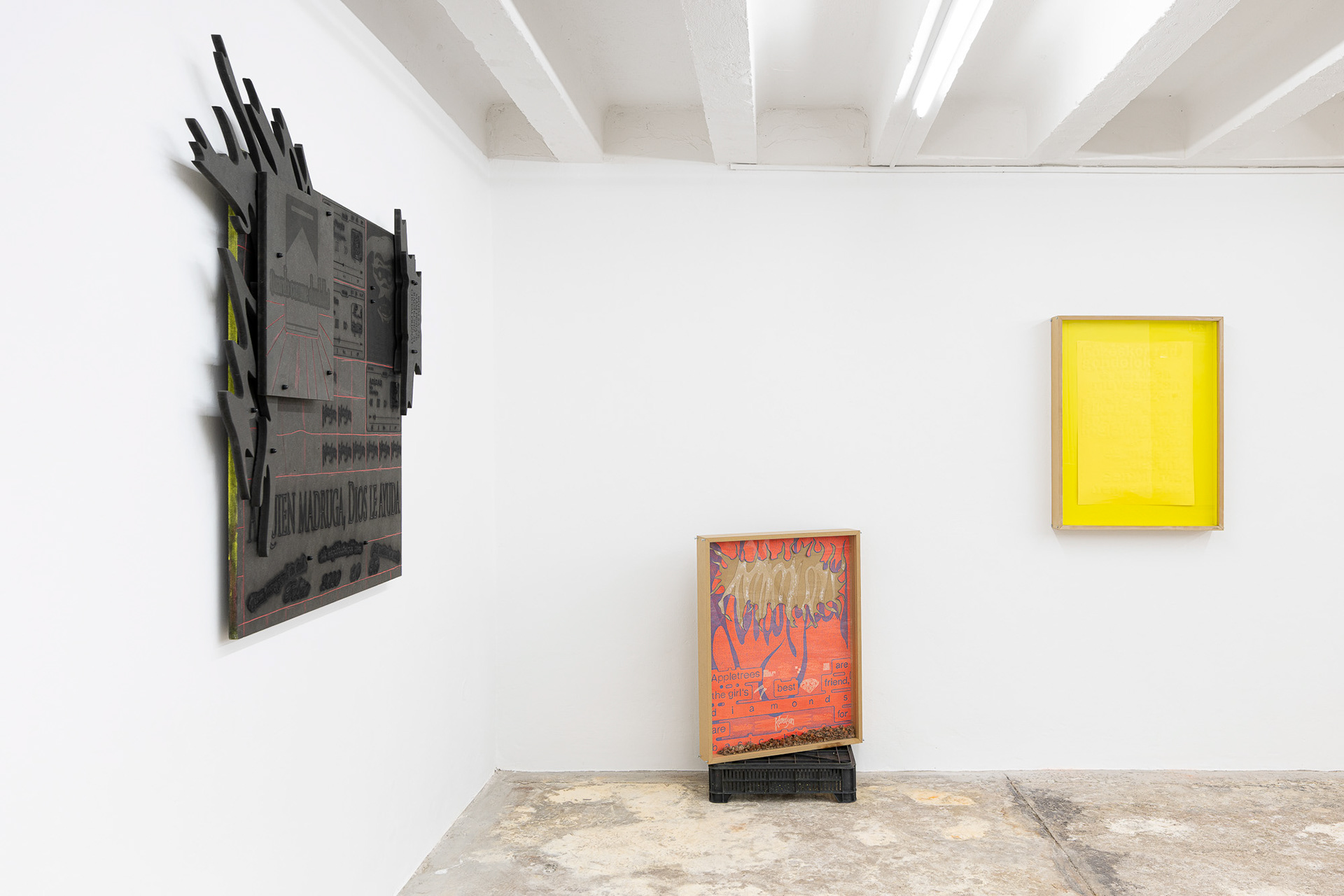
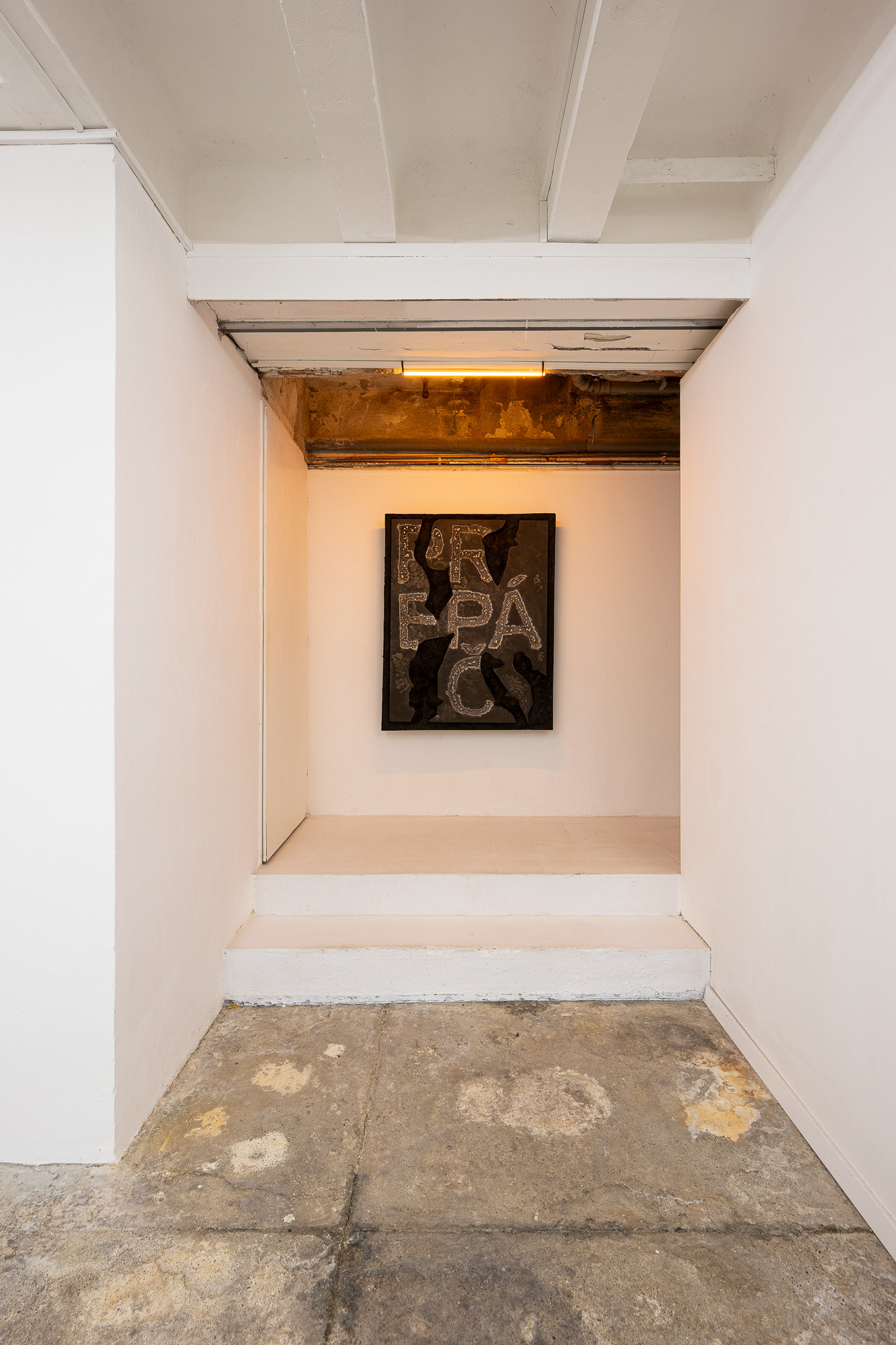
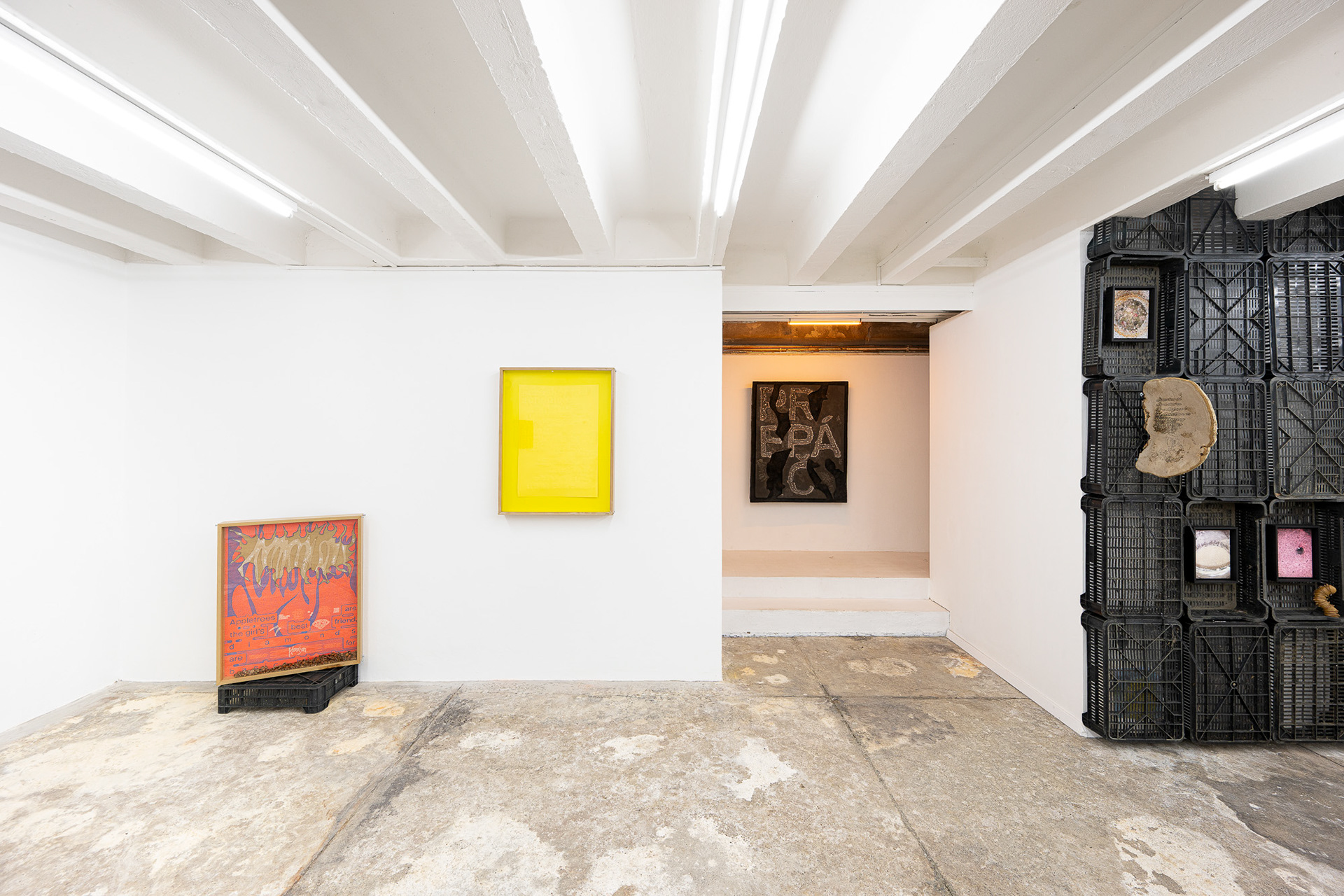
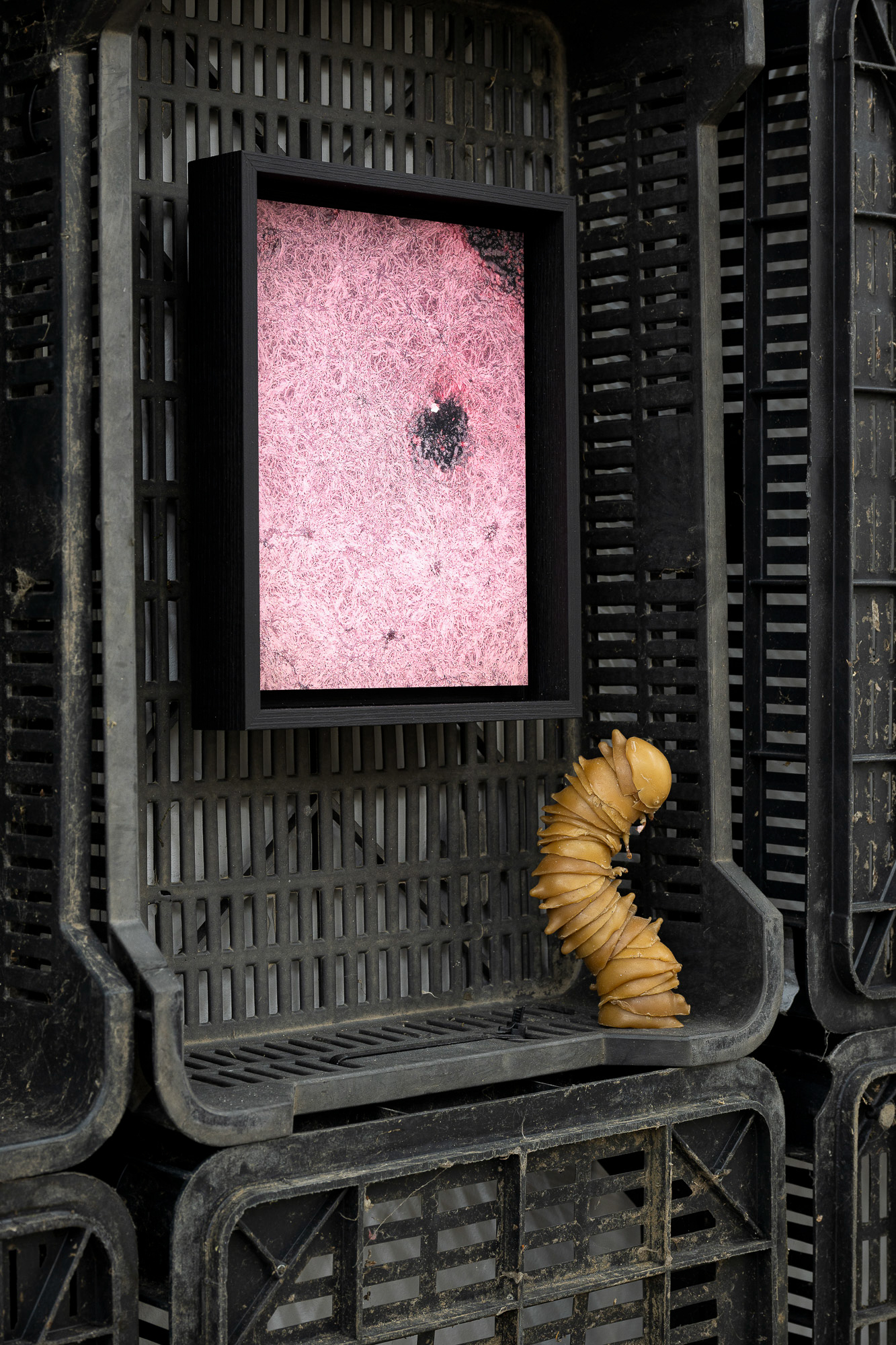
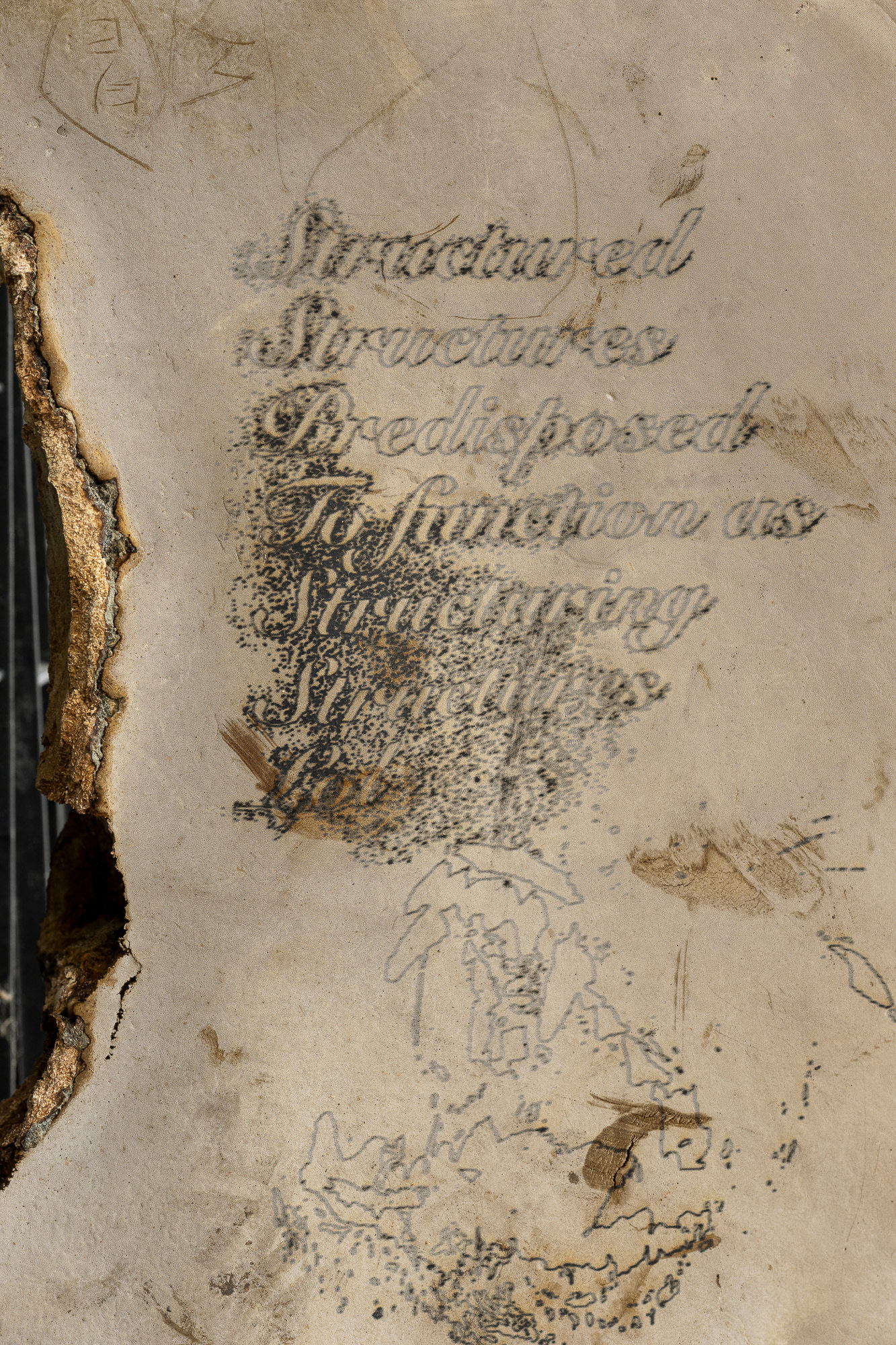
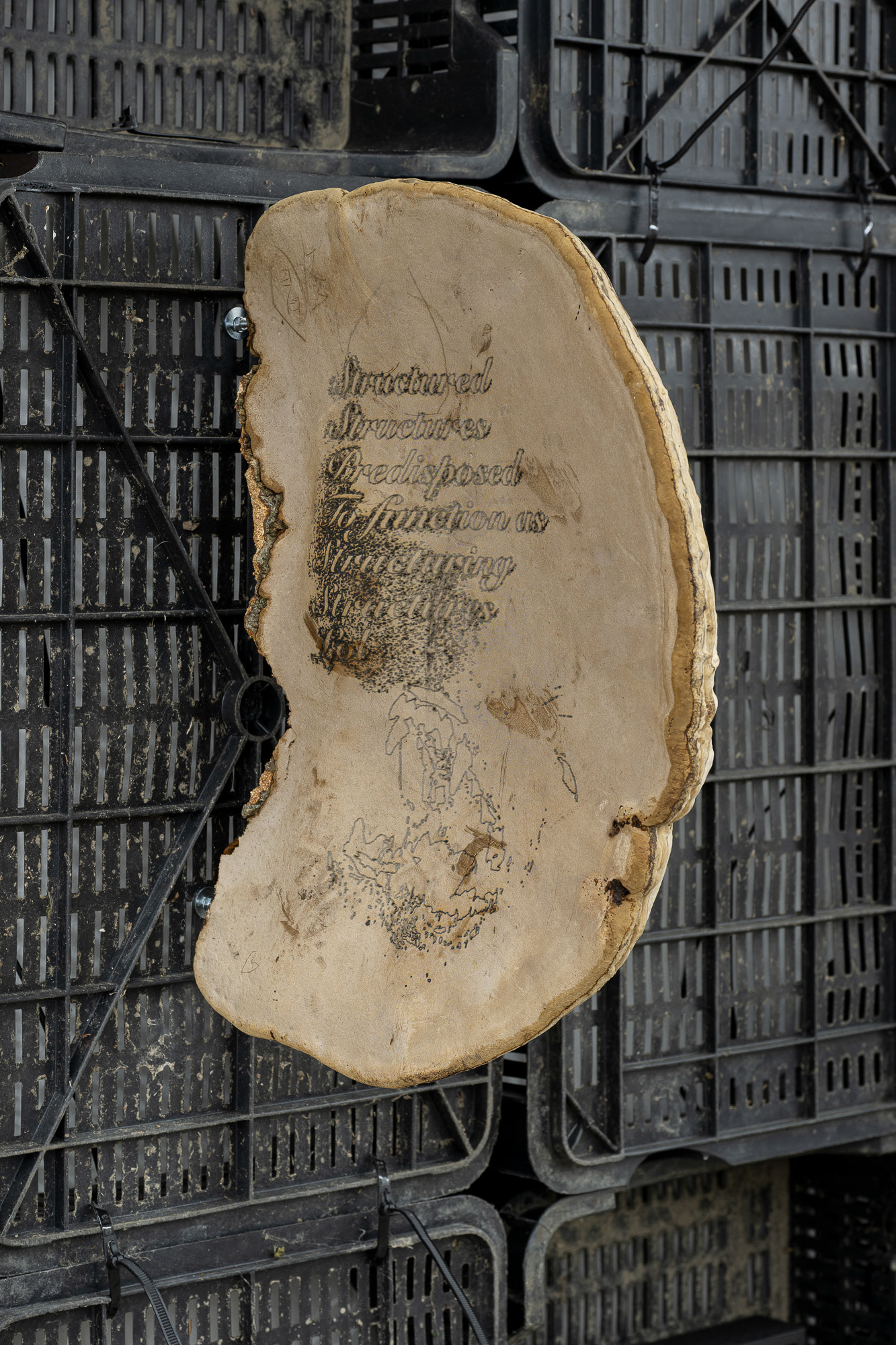
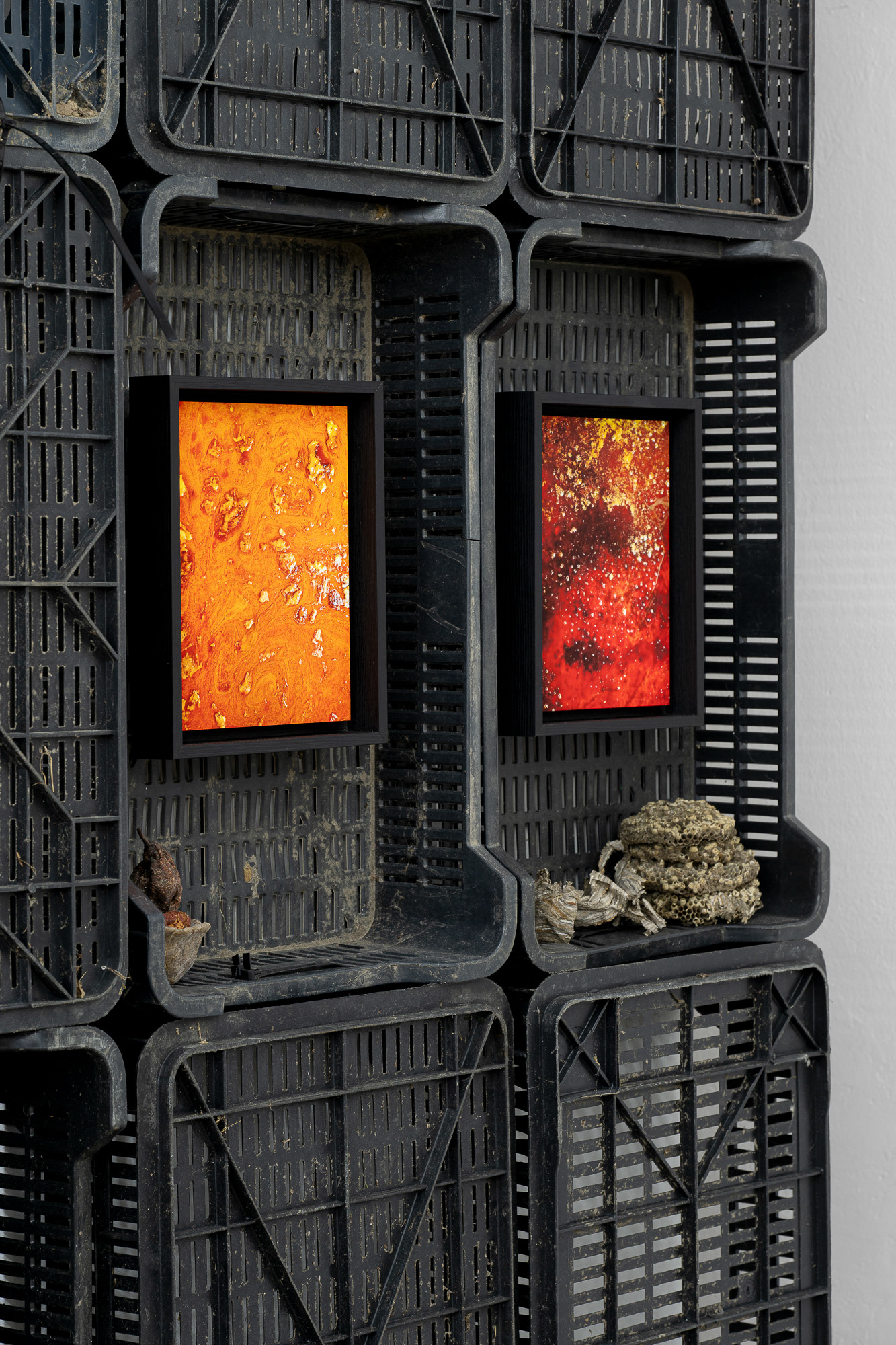
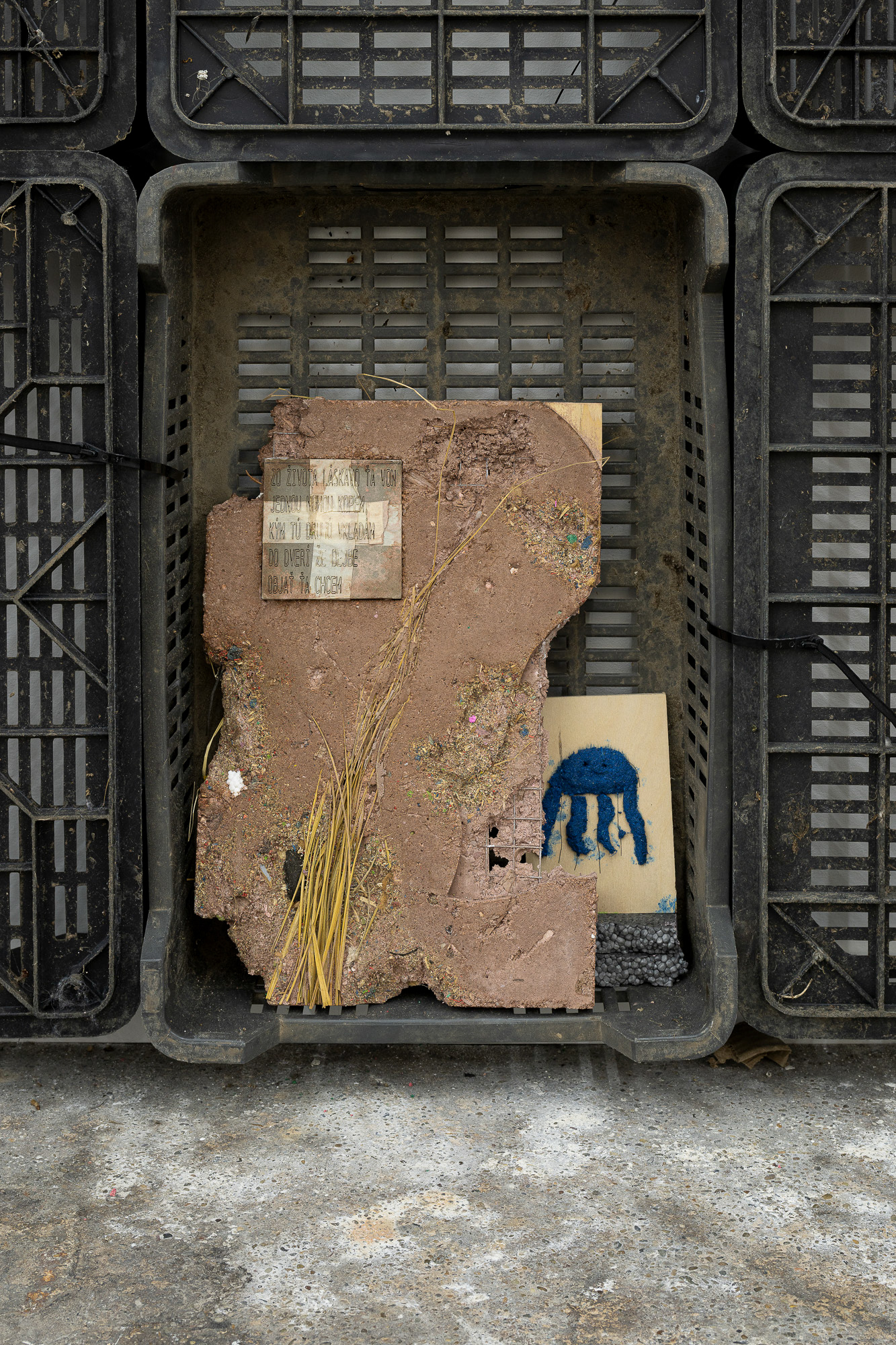
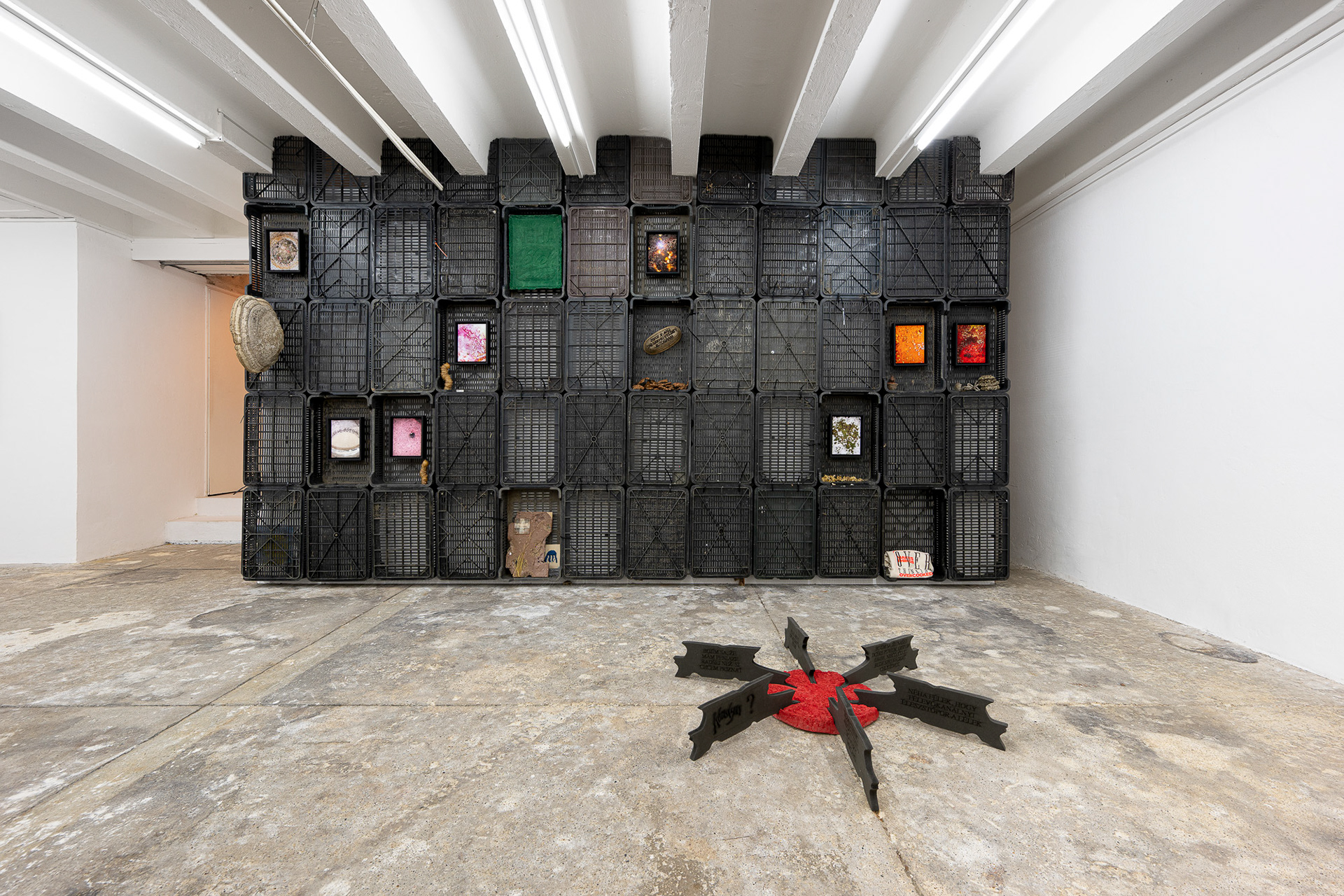
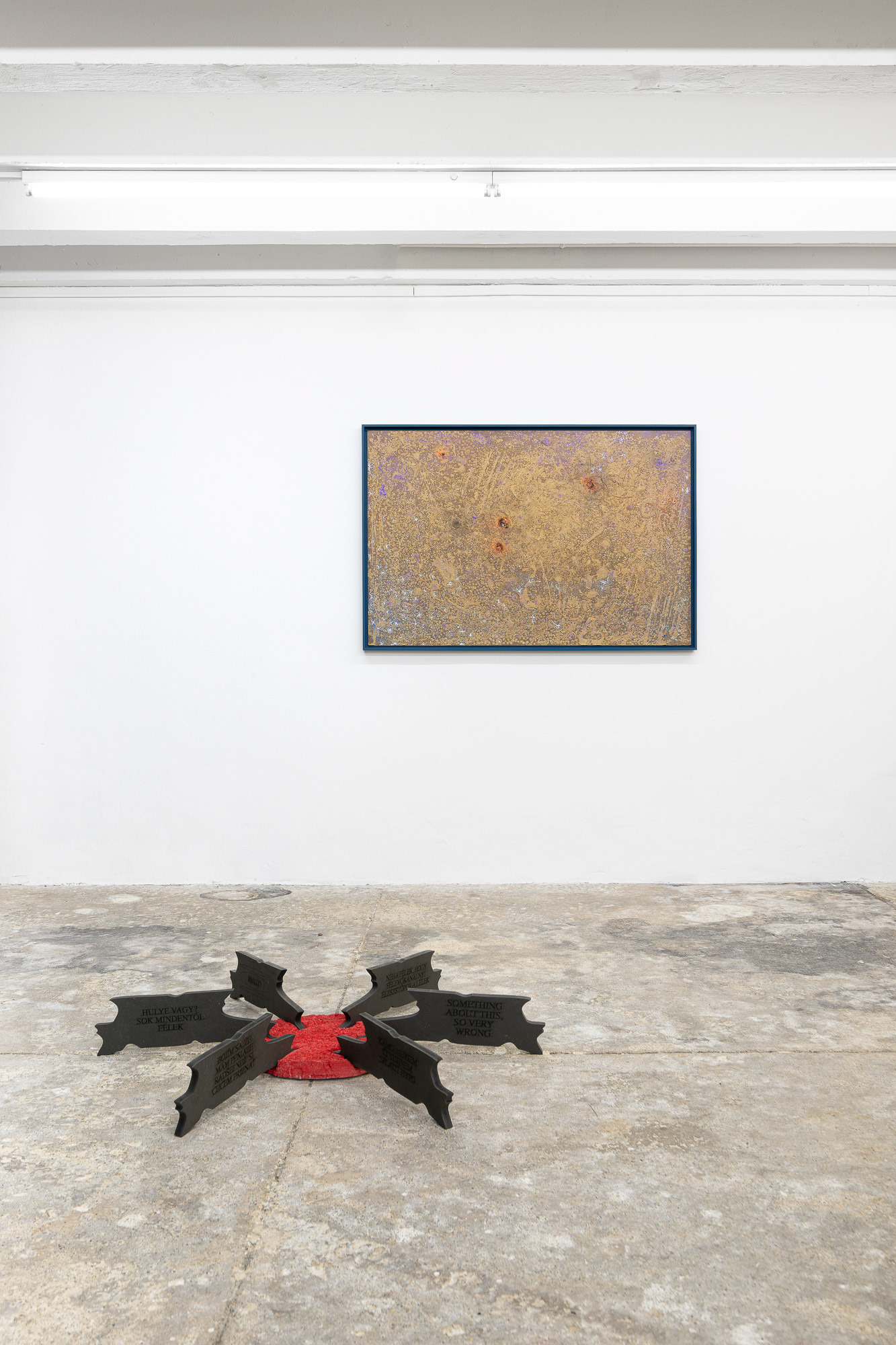
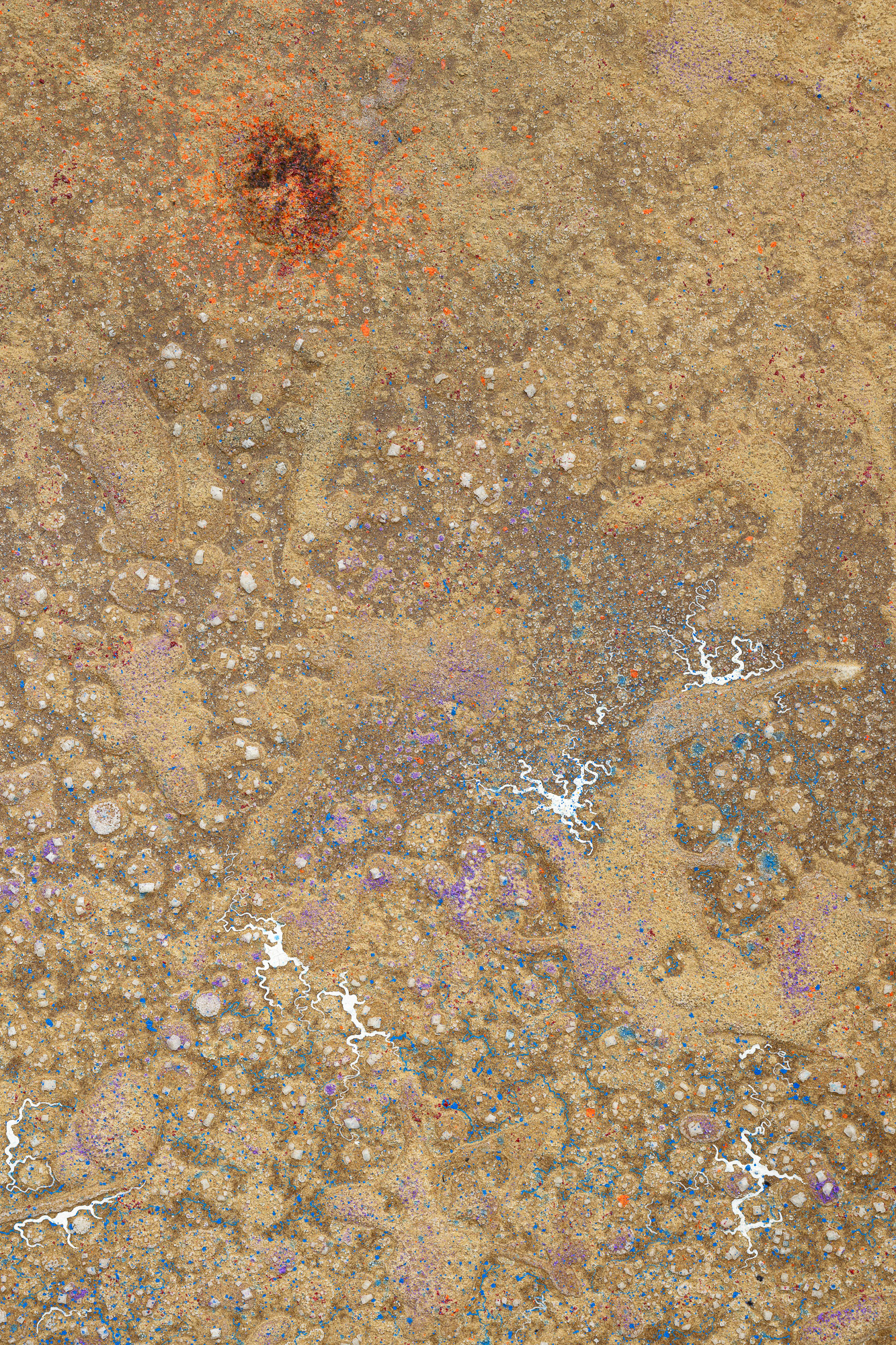
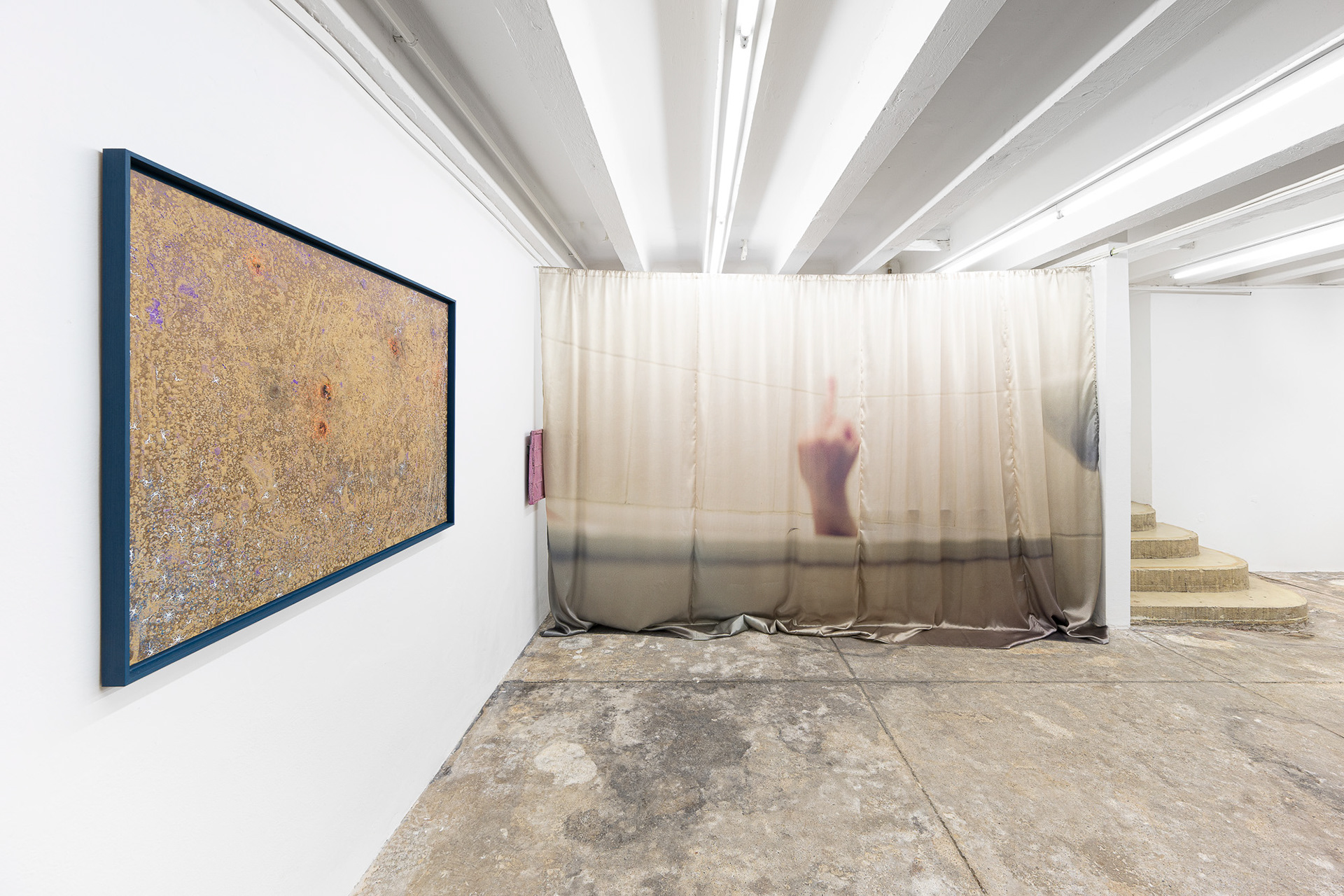
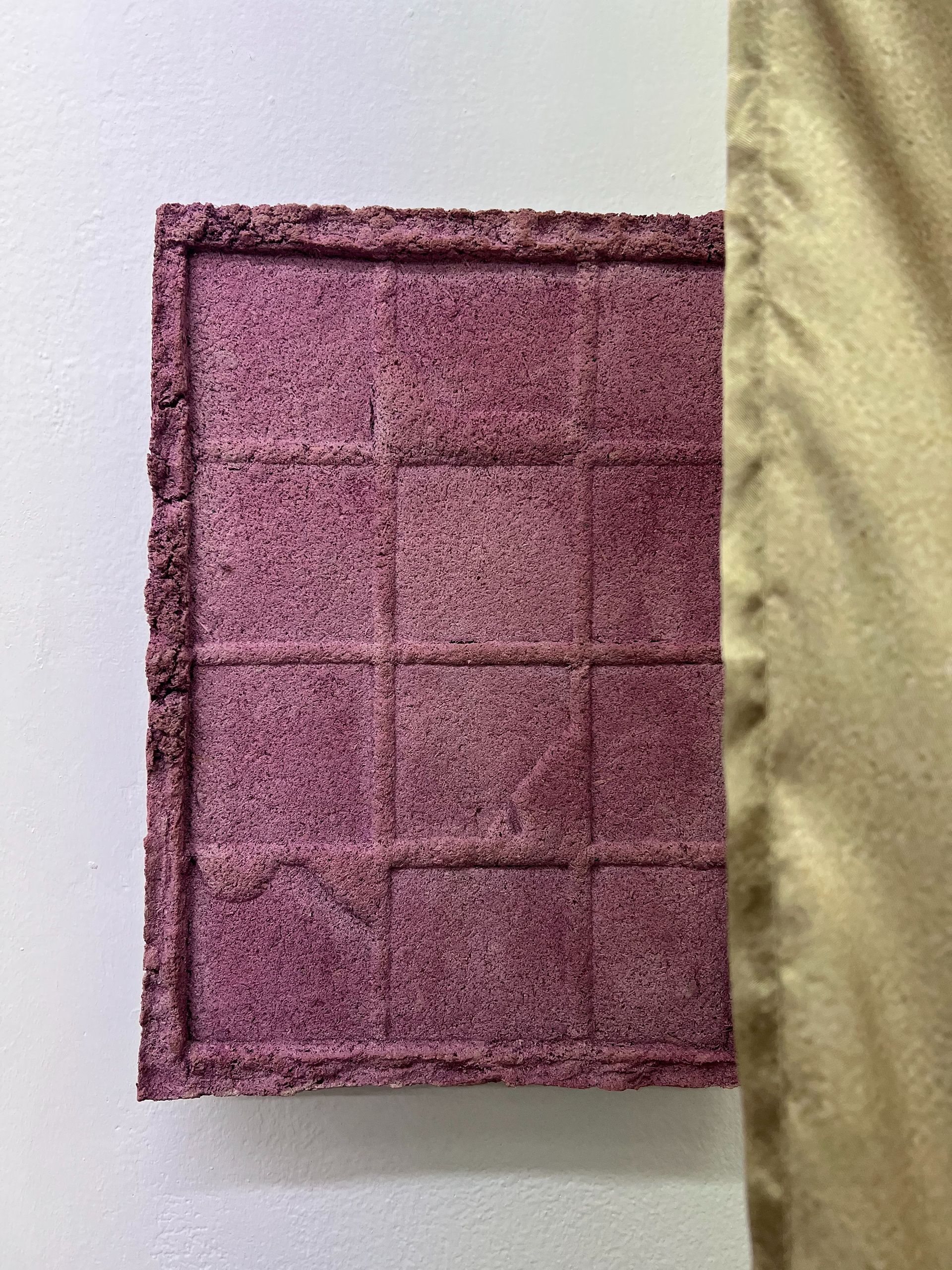
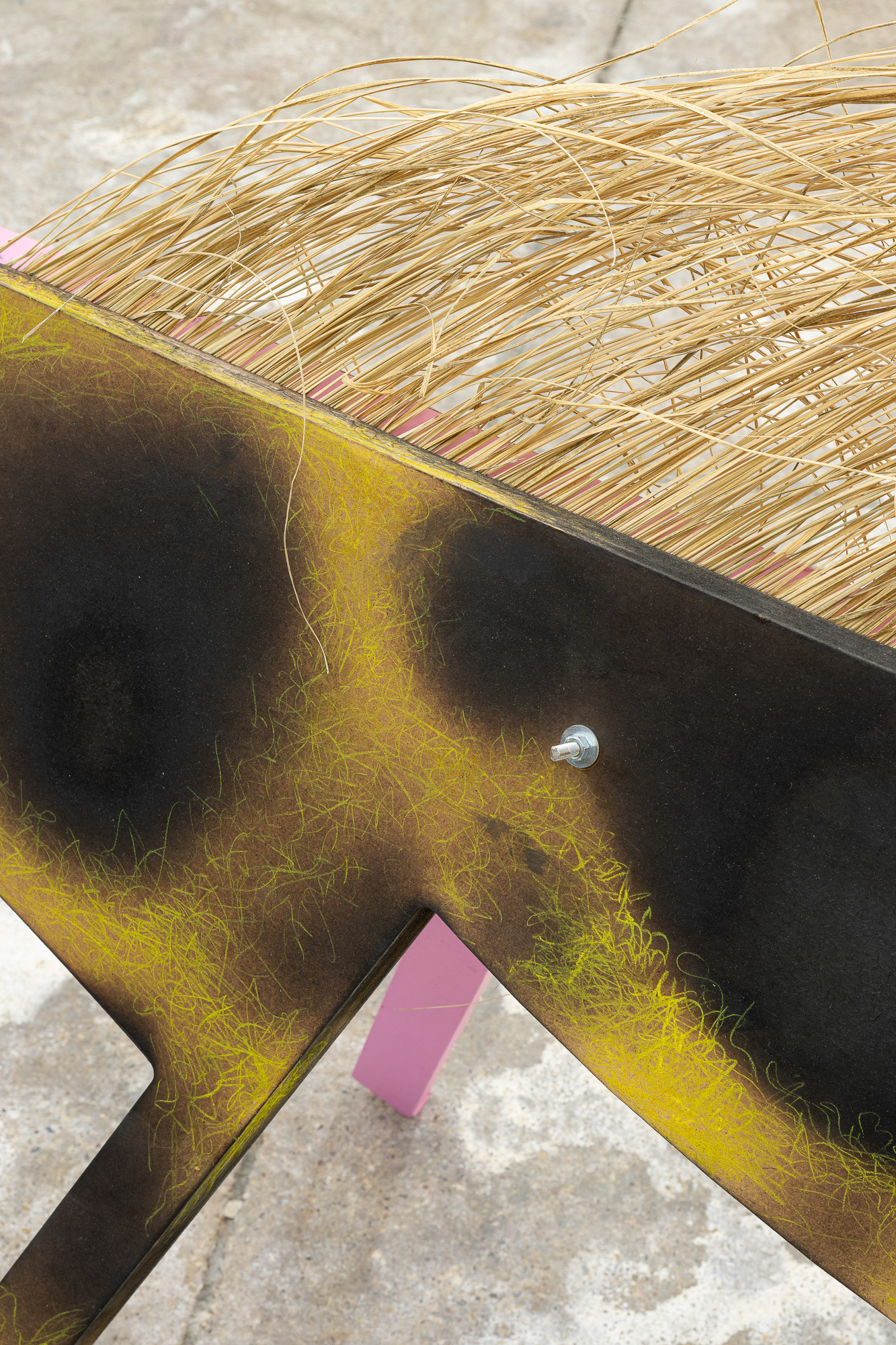
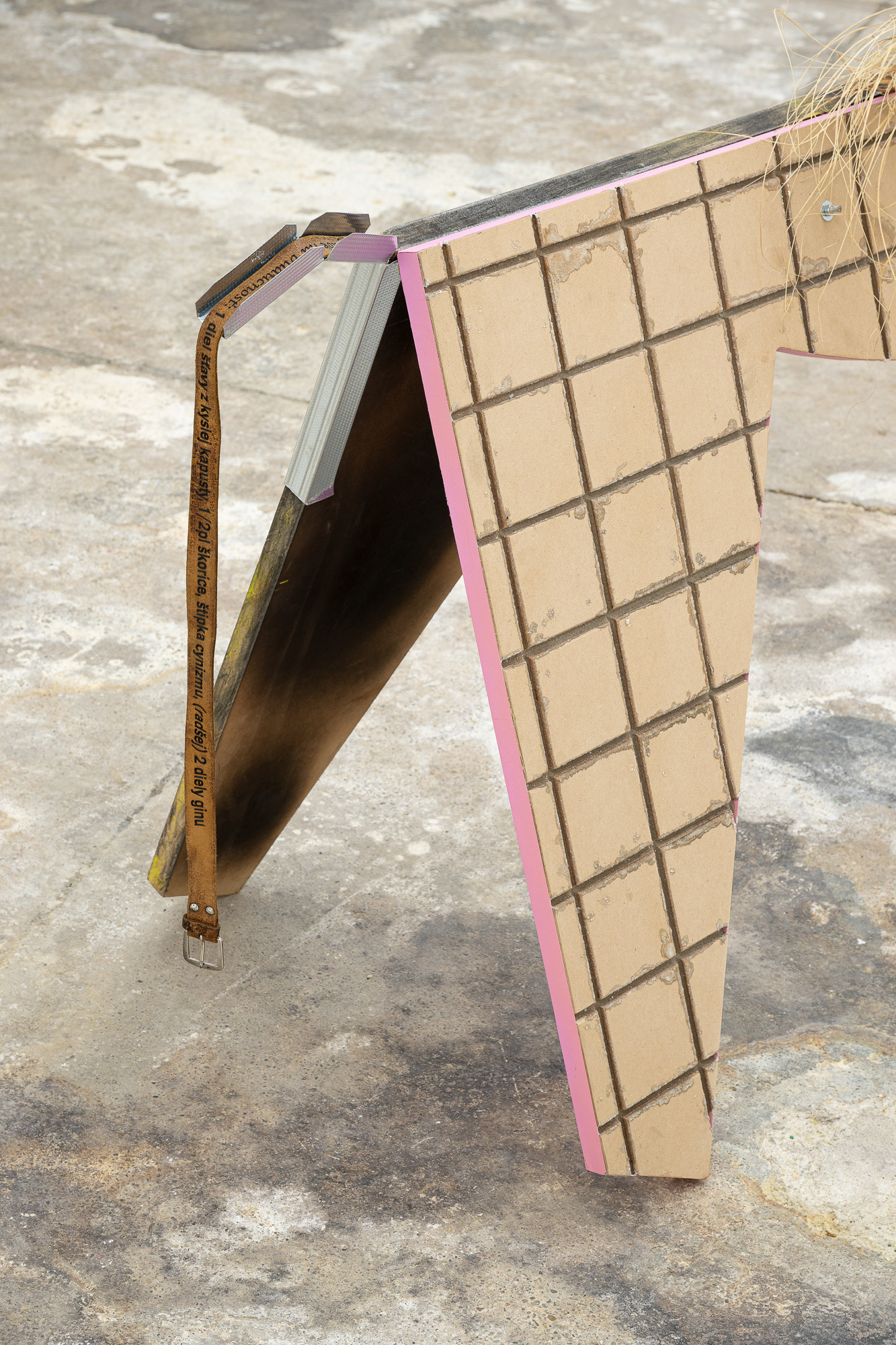
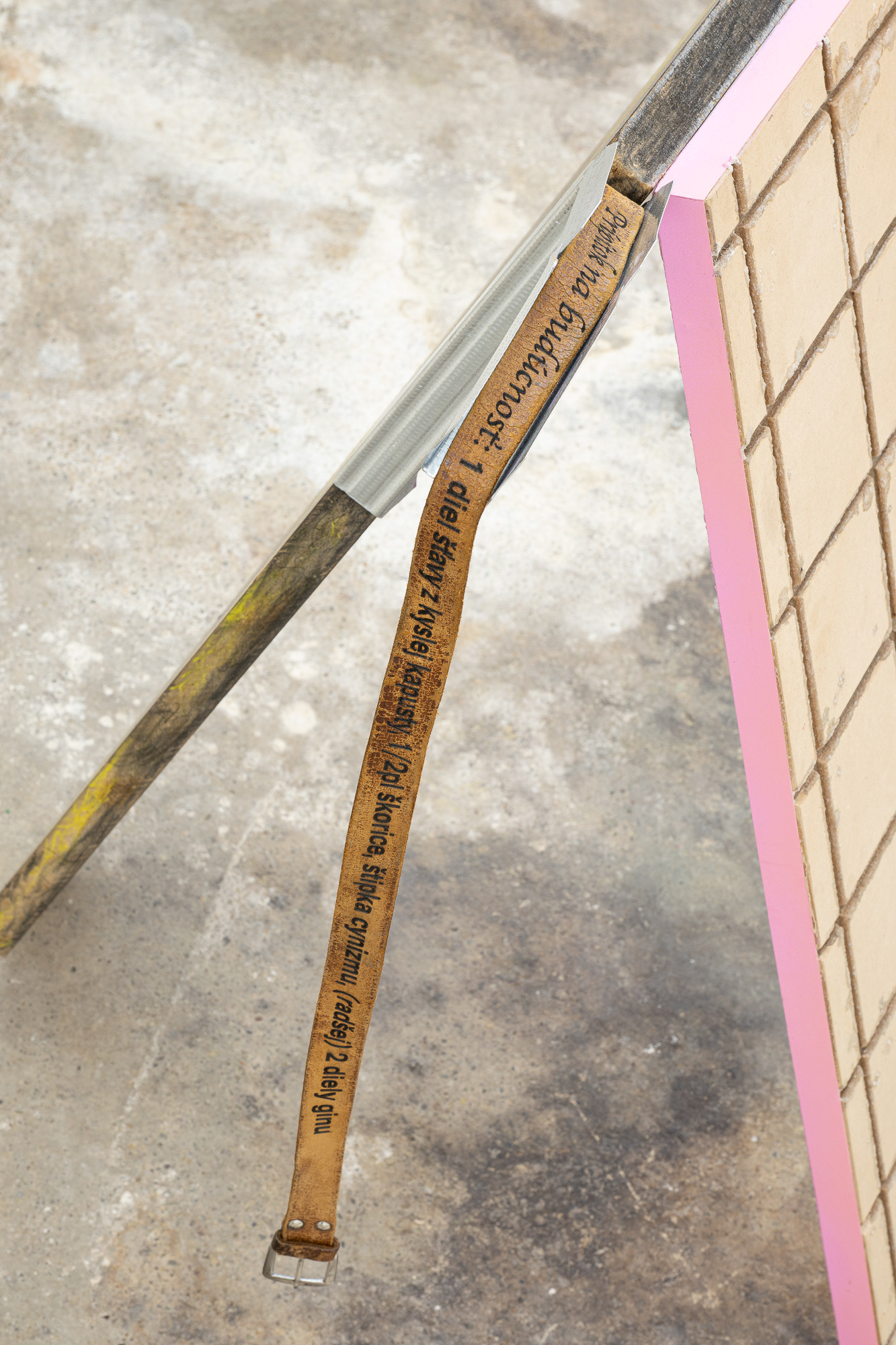
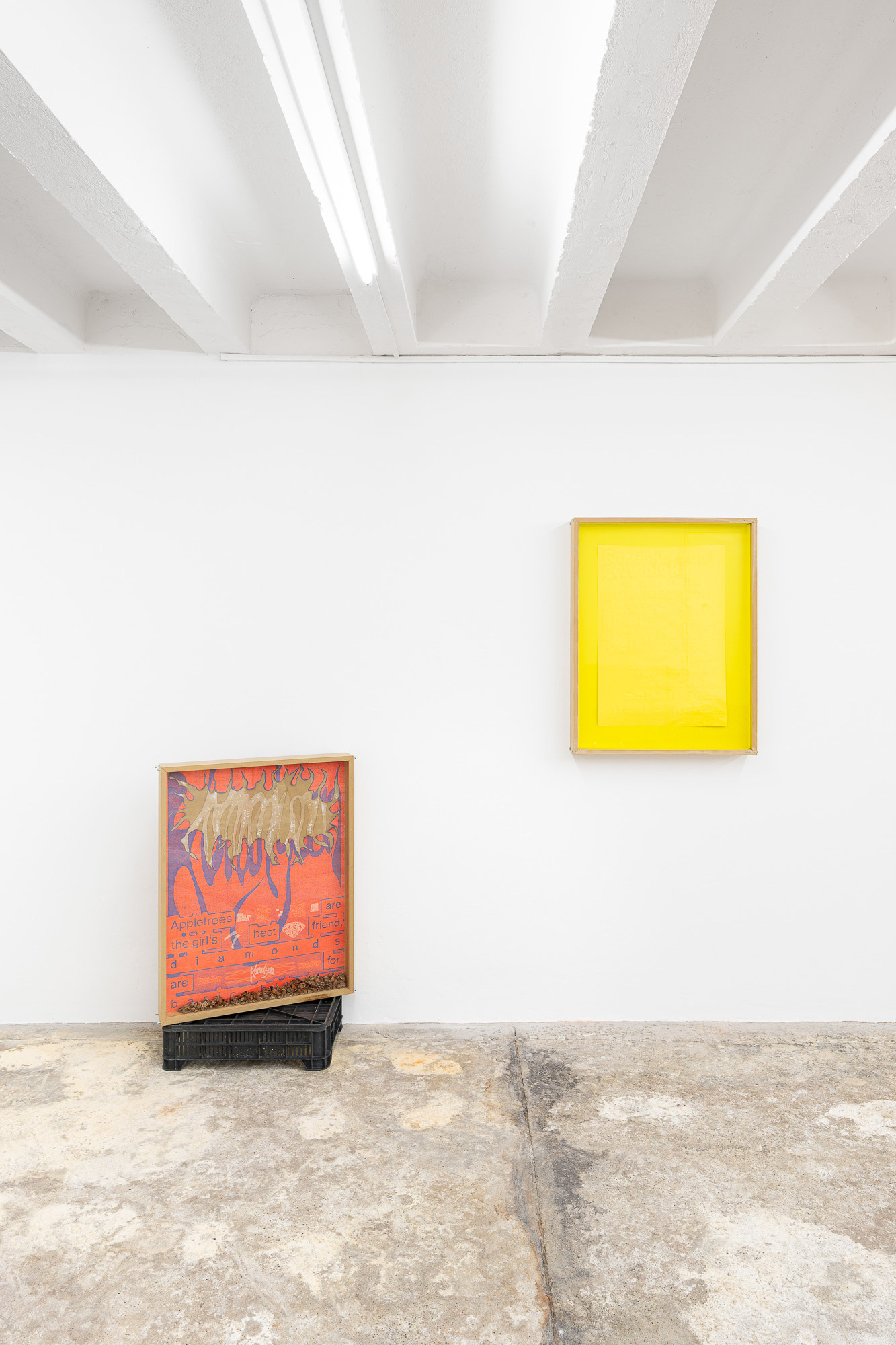
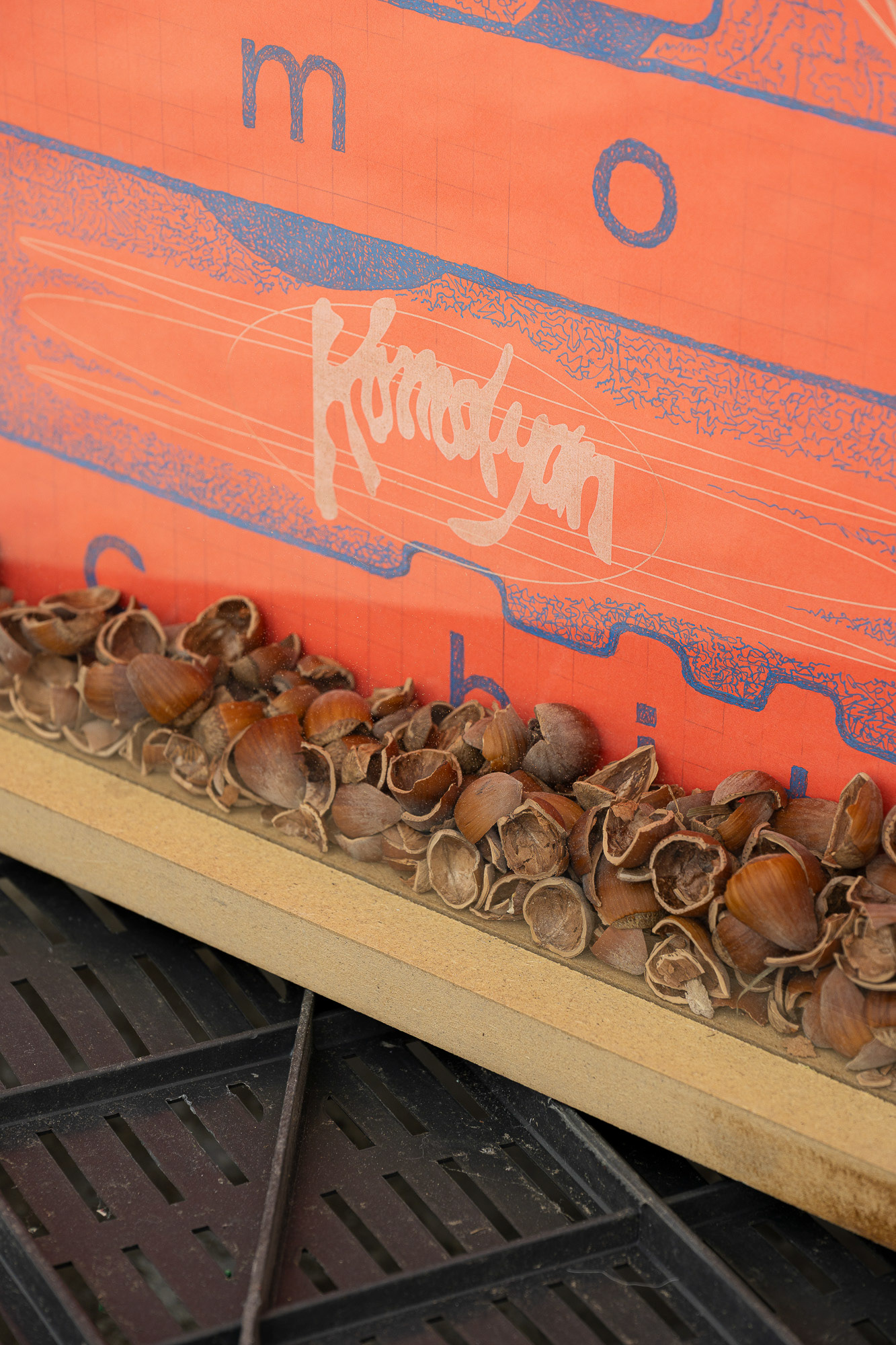
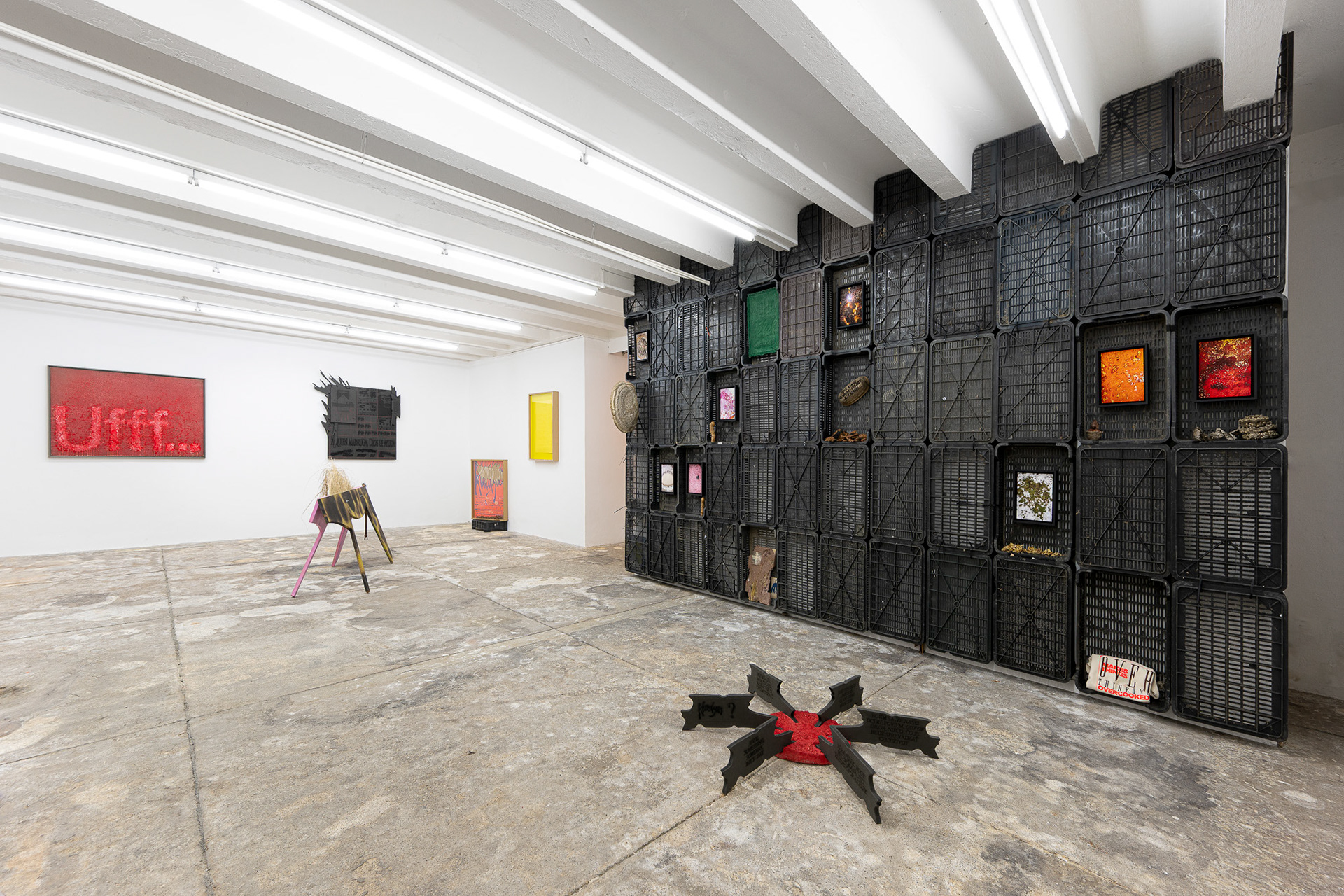
Material processes lie at the heart of Dávid Koronczi’s solo exhibition at VUNU Gallery in Bratislava. Image-making unfolds through techniques that recall photographic development and printing, expanded into sculptural and installation-based forms. Compressed wood chips, sawdust, shavings, and granulates – often drawn from household labor and the ongoing construction of the artist’s family home – become supports, surfaces, and image-producing agents. These materials sit alongside laser-carved graphics, pigment- and salt-modified substrates, and photographic studies of Eat Art residues. Rather than aiming at fixed images, Koronczi emphasizes process, where manual work and technical systems, chance and control, and human and non-human actors meet.
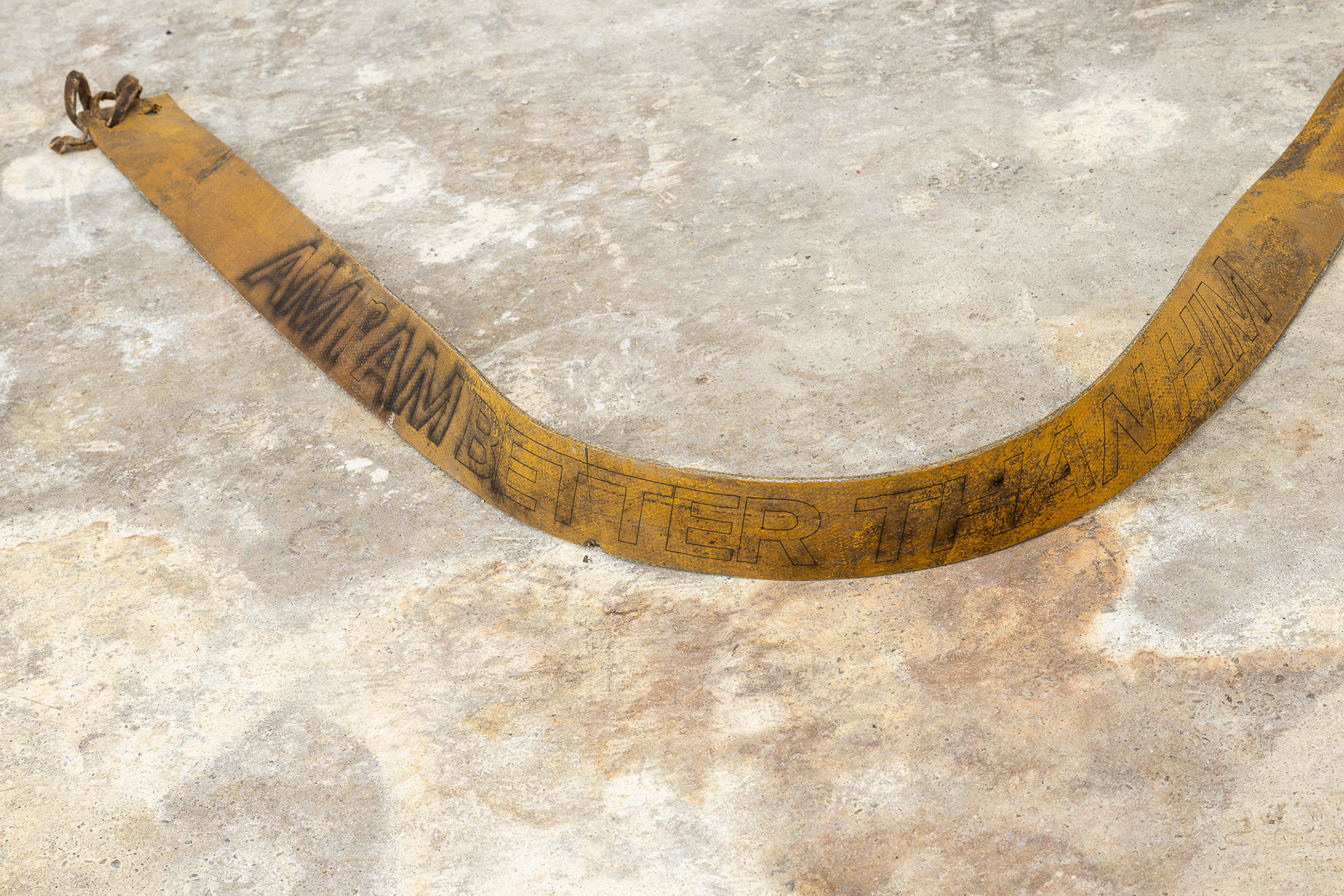
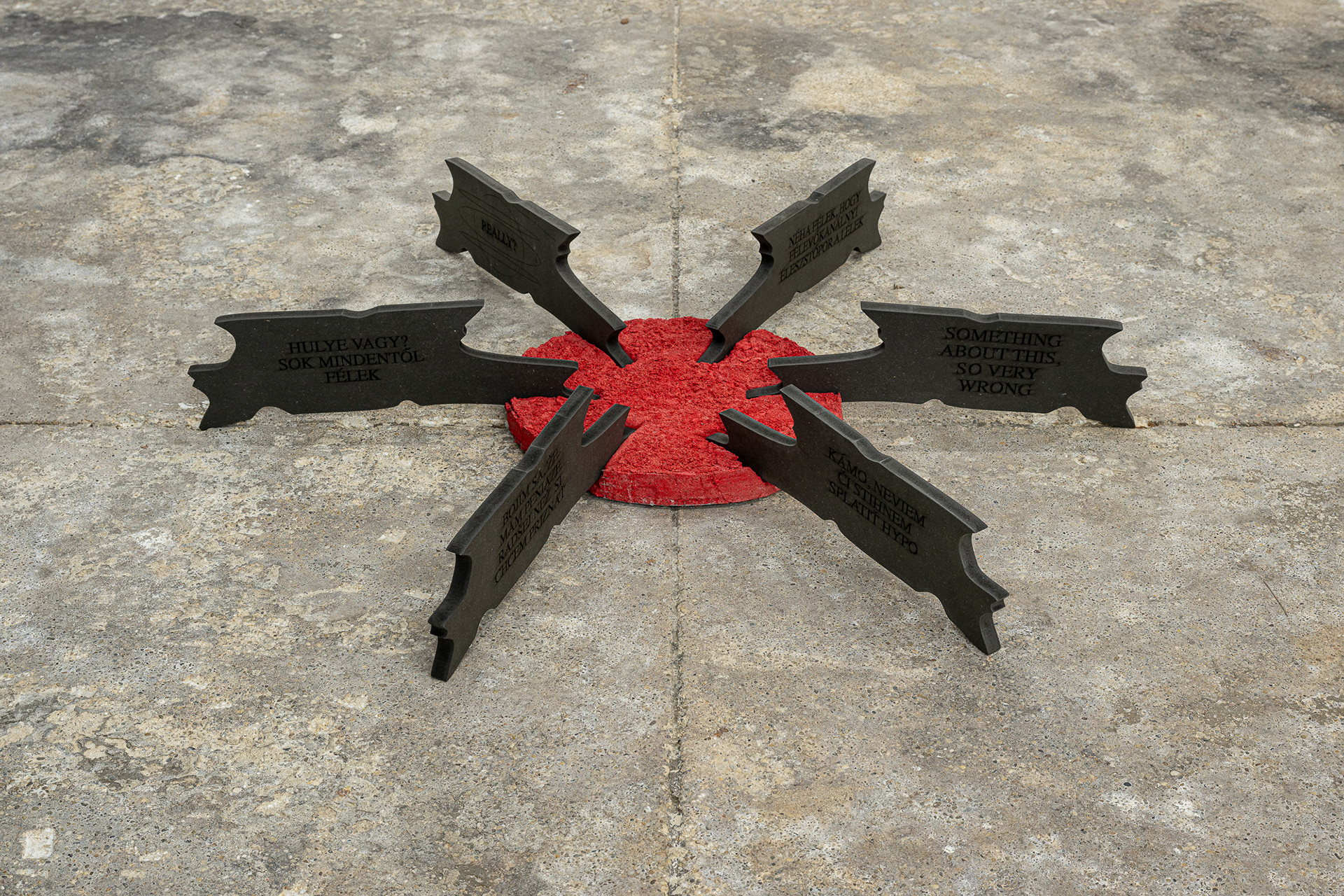
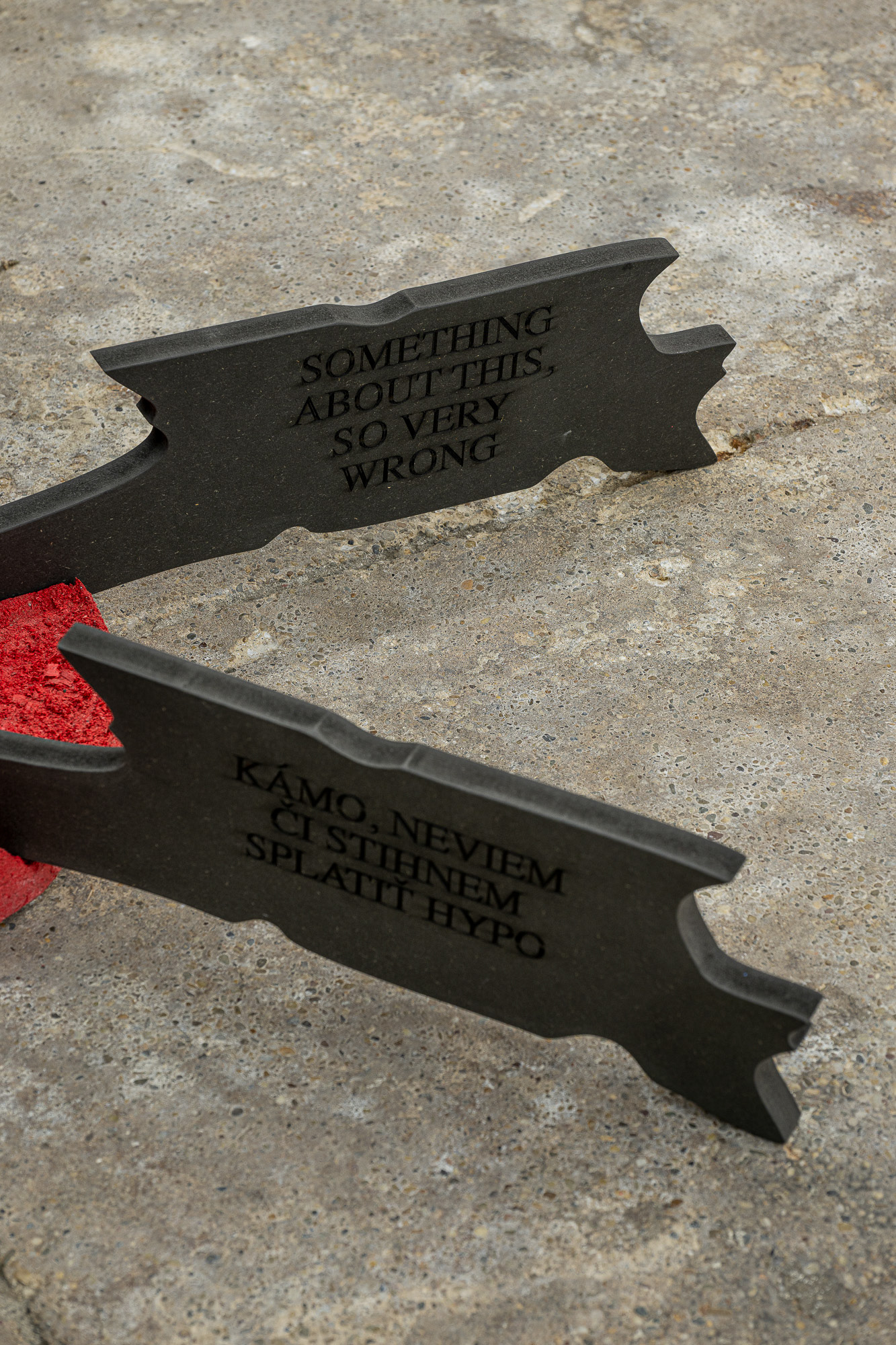
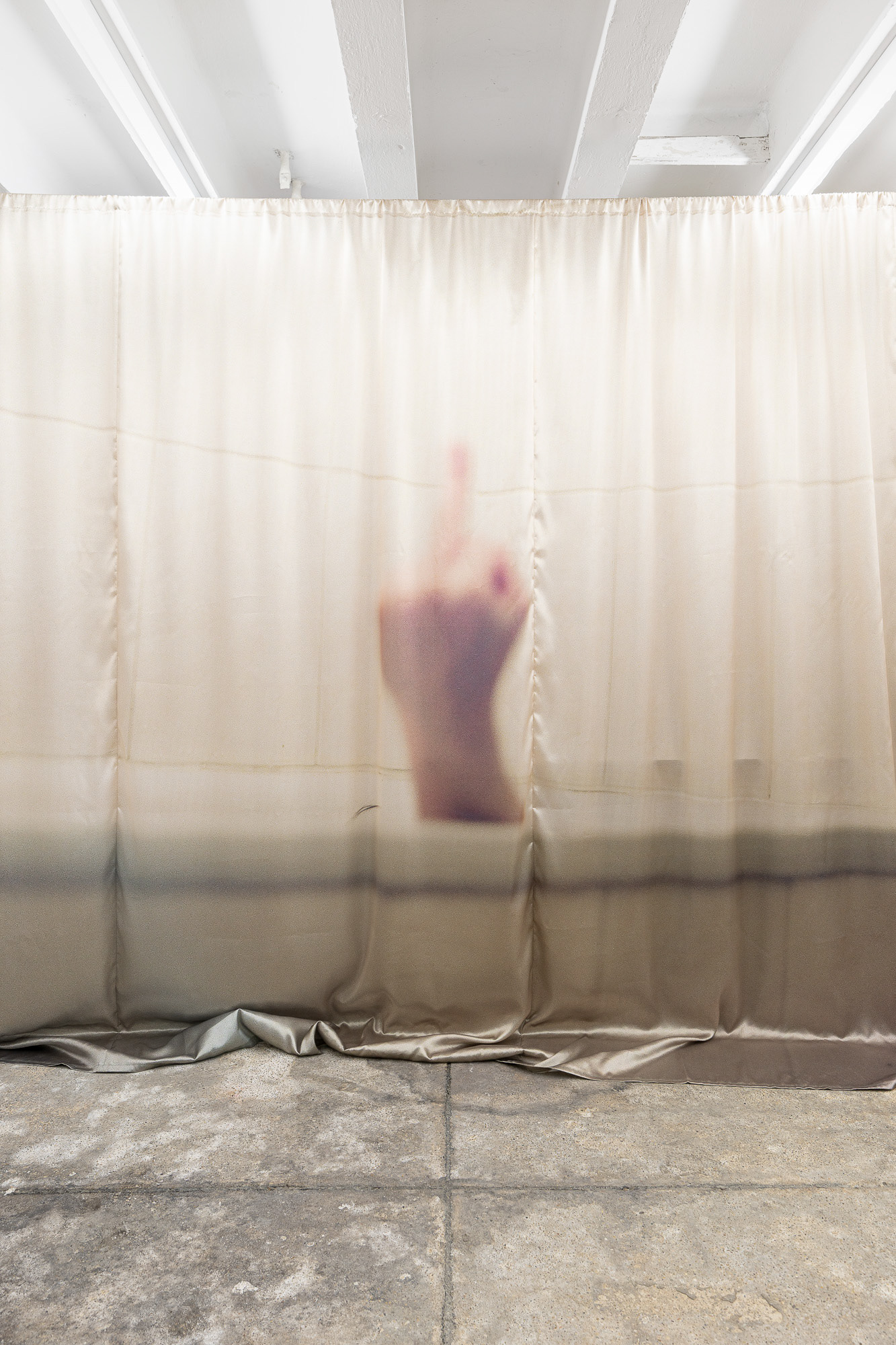
Language enters the exhibition as something spatial and alive. Text appears in visual registers associated with graffiti, graphic design, and urban vernaculars, carrying expressions such as Ufff…, prepáč, or fuck you. These phrases read less as messages than as gestures, in the spirit of the late Wittgenstein’s philosophy of language, which later served as a foundation for John L. Austin’s Speech Act Theory and, in art-historical terms, finds its context in Horst Bredekamp’s concept of Bildakt, or Image Act Theory. In Koronczi’s art, these words often function as logos, or as brief visual and linguistic acts that interrupt, assert presence, and register affect. Text and image work directly on their surroundings, loosening authorship and meaning while foregrounding friction, immediacy, and position.
Koronczi’s practice is rooted in everyday rural life and shaped by a post-conceptual photographic sensibility that treats material, space, and medium as active participants rather than neutral supports. Personal experience, geocultural position, and image-making unfold together through small-scale agriculture, domestic labor, food preparation, and eating as both action and image, informed by the legacy of Eat Art. The landscapes of Nógrád County and the surroundings of Lučenec are not presented as backdrop but as lived contexts shaped by terrain, climate, habit, and inherited forms of work. In this borderland region, place takes form as embodied knowledge, marked by heterogeneity, translation, and a quiet, everyday cosmopolitanism.
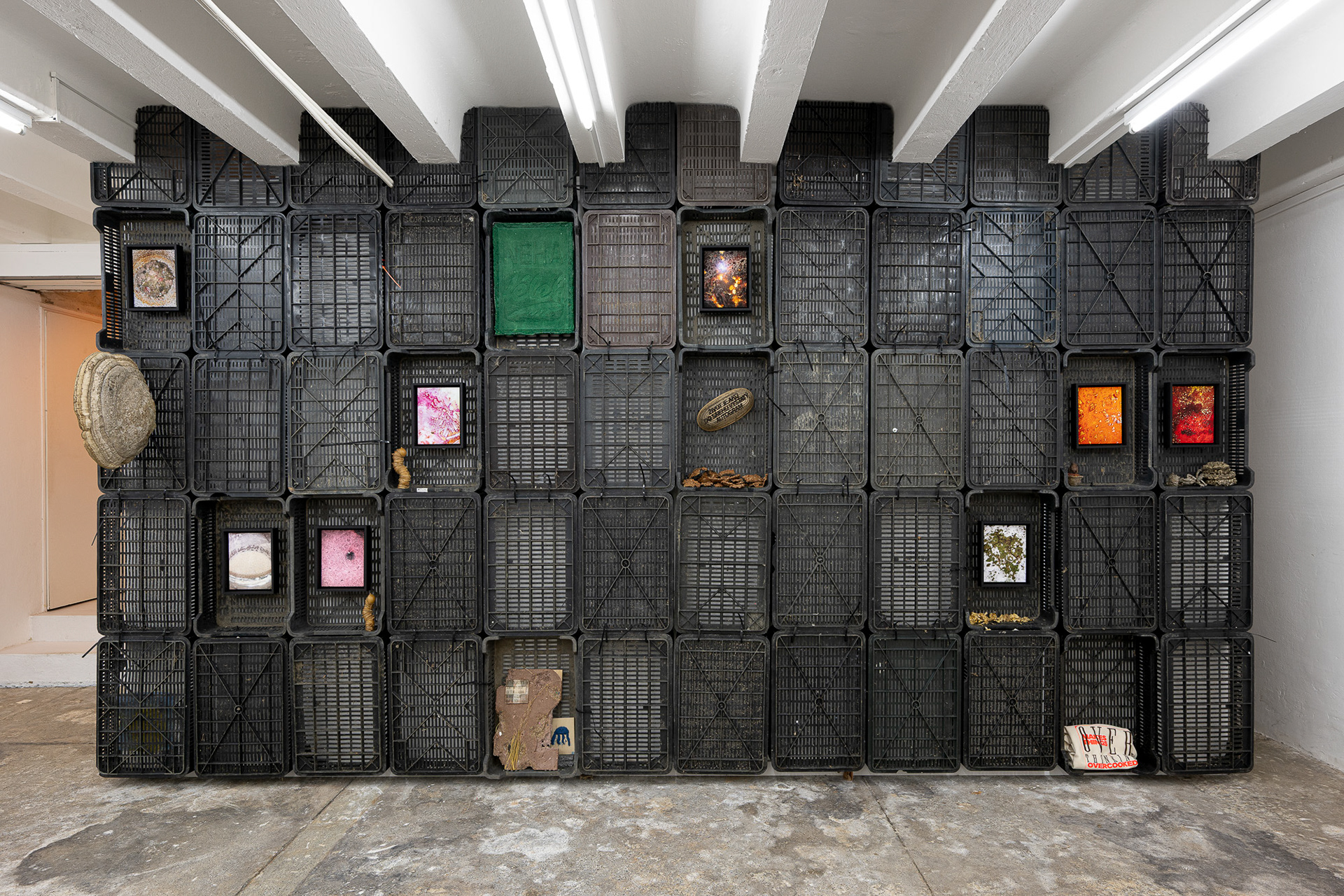
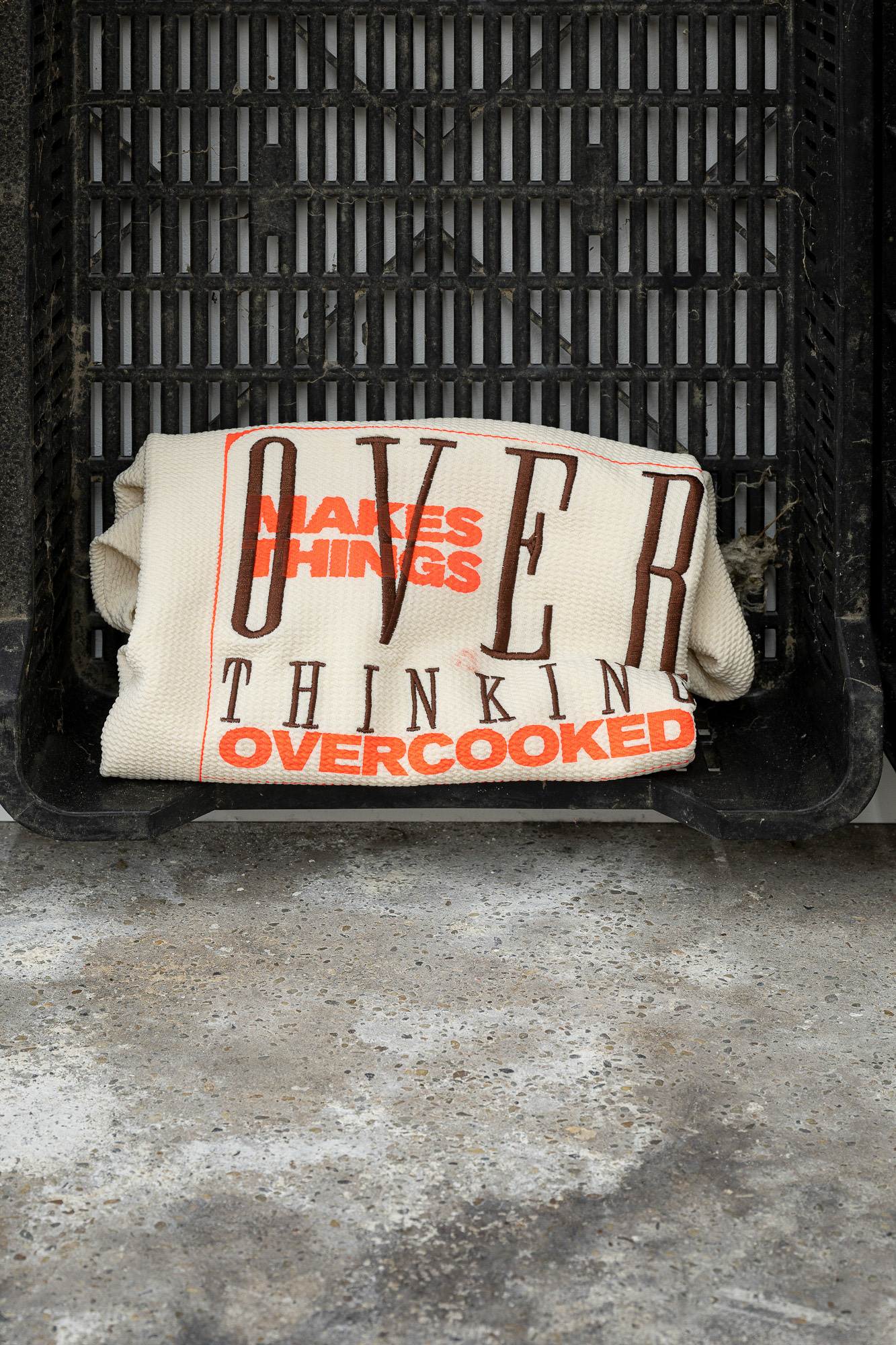
Questions of circulation, value, and standardization surface through a distinctly glocal visual language. References to graphic design, urban visual culture, graffiti, and hip hop are filtered through post-digital sensibilities and folded back into a place-bound material practice made from natural materials, found objects, and everyday residues. Strategies associated with pop art – irony, repetition, over-identification – are used to expose the mechanisms through which desire, consumption, and visibility circulate. A recurring element is the plastic vegetable crate, a standardized and modular object that evokes seriality, efficiency, and modernist universality. These logics reappear in grid structures across the exhibition, where hand-drawn processes align with digital tools and global systems of circulation, resonating with Keller Easterling’s analysis of planetary infrastructure space in Extrastatecraft.
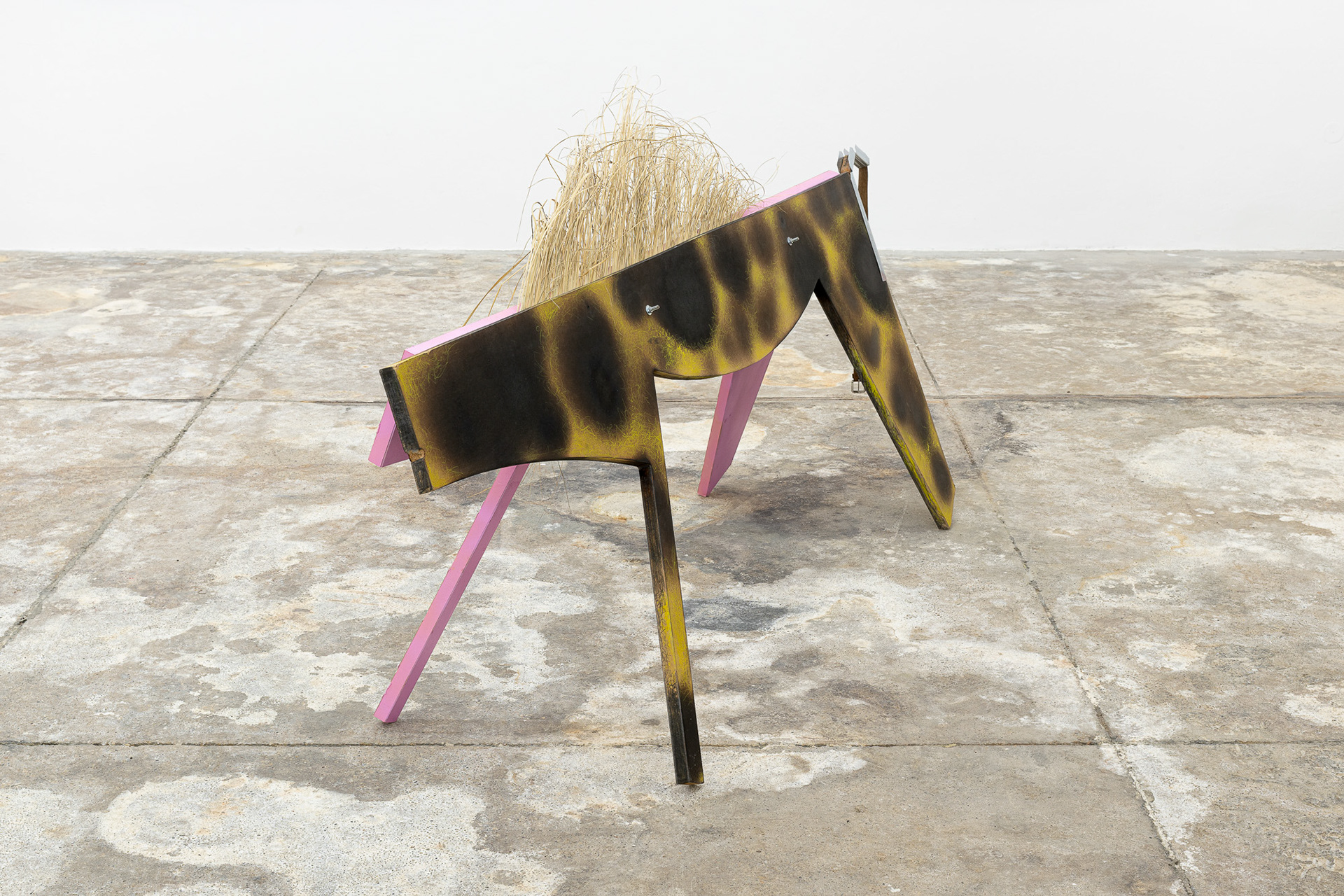
Koronczi approaches the rural without nostalgia. The countryside is not treated as a remnant of the past, but as a contemporary site where alternative ways of living together can be tested. References to arte povera function as method rather than style, underscoring an ethic of working with what is at hand. Moving between kitchens, yards, and hillsides, the exhibition shifts scale from the intimate to the planetary, suggesting that shared futures are shaped not through grand abstractions, but through everyday acts – through how materials are handled, language enacted, resources shared, and life sustained in ongoing cycles.
Zsolt Mikósvölgyi
Zsolt Miklósvölgyi is an editor and art writer based in Budapest, Hungary. He currently works as a curator at acb Gallery in Budapest. In 2014, he co-founded Technologie und das Unheimliche (T+U), a Berlin-Budapest-based art collective and publishing project, alongside Mark Fridvalszki and Márió Z. Nemes. He holds a Ph.D. in literary and cultural studies and has been a visiting research fellow at Humboldt University in Berlin, Germany (2013–2014), and the Wirth Institute at the University of Alberta in Edmonton, Canada (2016–2017). In 2021, he participated in the MeetFactory Prague artist-in-residence program, and in 2020, he was a Visegrad Fund literary fellow in Prague. Together with the T+U collective, he recently participated in a solo show at Trafó Gallery in Budapest (2024) and the Július Koller Society in Bratislava (2022), as well as a group show at ISKRA DELTA: The 34th Ljubljana Biennale of Graphic Arts (2021), and co-curated projects at OFF-Biennale Budapest (2021).
Installation: Dávid Koronczi, Zsolt Miklósvölgyi, Lukáš Sobota, Tomáš Kmeť
Special thanks: Jaroslav Baláž, Martin Piaček, Martina Szabóová, Zoja Koronczi
The exhibition Sometimes I Try to Change the World; More Often, the World Changes Me. was supported by the Tatra Banka Foundation and the Internal Grant System of the Academy of Fine Arts and Design in Bratislava.